Thursday of the Twenty-fifth Week in Ordinary Time
Sometimes I feel like a hamster in a hamster wheel going around and around and not really getting anywhere. Some days and weeks feel like the same chores, the same work being done just to have to do them all again: meals to be made, dishes to be done, school lunches to be packed, laundry to be washed, homework to be supervised, lessons to be driven to; grocery shopping, cleaning, paying bills, scheduling appointments, running errands, ‘round and ‘round and ‘round life goes.
Feast of Saint Matthew, Apostle and evangelist
Today is the Feast of Saint Matthew, Apostle, and Evangelist. Matthew’s life and witness prompts me to consider what it means to be with Jesus and consequently what it means to go where Jesus goes. I pray that today we might all be drawn more deeply into the love and presence of Christ and that we might have the kind of loving and merciful hearts that compel us to go where Jesus goes.
Memorial of Saints Andrew Kim Tae-gŏn, Priest, and Paul Chŏng Ha-sang, and Companions, Martyrs
How is your prayer life?
It’s a necessary and important question. Possibly THE most important question. So take five minutes, stop reading, and honestly reflect – how is your prayer life?

Monday of the Twenty-fifth Week in Ordinary Time
Upon the death of Pius XII in 1958 the conclave that gathered was depleted as cardinals hadn't been appointed for some time. They chose a stopgap (so they believed) successor to Peter, Angelo Giuseppe Roncalli, who took the name John XXIII. They thought him transitional (which he was) and that he wouldn't make waves (which he did).
Saturday of the Twenty-fourth Week in Ordinary Time
Just as we have borne the image of the earthly one,
we shall also bear the image of the heavenly one
Being “earthly” in Scripture always sounded so gross and slimy to me. I always have to read Paul's words with a grain of compassionate sodium chloride, though. The reality is that we are human - from the earth, the dirt, the atoms (read Adams).
Memorial of Saints Cornelius, Pope, and Cyprian, Bishop, Martyrs
What a bunch of pathetic schmucks! Right? Did this Jesus guy really come back from the dead? Sounds like zombie-talk…perhaps the origin story of The Walking Dead? (disclaimer: I only know this show has zombies; I’ve never seen it nor do I know any information about the storyline or plot). Paul strikes at the core of our Christian faith today. Jesus' resurrection is the linchpin to the whole ordeal. If Jesus was not raised from the dead, the Gospel is meaningless and all of us who believe in him are a bunch of deluded and gullible fools. If the resurrection isn’t true, then our faith is in vain. We might as well eat, drink, and be merry because this is it. If there is no resurrection, there is no hope. If there is no resurrection, then everything we thought we knew about God is a lie. If there is no resurrection, then all we have is this life. And the good news that Jesus is proclaiming in the gospel is not really “good news” at all.
Memorial of Our Lady of Sorrows
As I read the lectionary selections for today, I was stunned by the juxtaposition of the excerpt from Paul’s first letter to the Corinthians and the Gospel reading from John. And what popped into my head was one of my favorite hymns, an African-American spiritual that (I learned today) probably predates the Civil War.
Feast of the Exaltation of the Holy Cross
Today is the Feast of the Exaltation of the Holy Cross. The moment I turned to the readings for today, I felt a profound sense of awe. This Feast Day brings me to my knees. Humbled and overwhelmed by gratitude, I simply desire to pray at the foot of the Cross. I invite you into that space with me.
Memorial of Saint John Chrysostom, Bishop and Doctor of the Church
When first diagnosed with Celiac Disease several years ago, I was severely anemic, and my doctor ordered me not to engage in any strenuous exercise because I was at a higher risk of having a heart attack. This really surprised me. Obviously not being a physician myself, I had to learn about what was happening inside my body. Basically, my understanding is that this autoimmune disease was causing the lining of my intestines to be damaged when I consumed any gluten, which in turn was preventing my body from absorbing the nutrients and minerals it needed, including iron. I learned again that our bodies need iron to carry oxygen to the various organs, including the heart. This compromised my heart, apparently putting me at greater risk for a heart attack (although I was fairly young) until the iron my body needed was able to be replenished. Thankfully, once I removed all gluten from my diet, the intestines healed and I was able to absorb the iron I needed. This experience truly emphasized for me the complex interconnections within our bodies, and the important role that even small, usually unseen, parts play in sustaining the body and keeping it alive and functioning well.
Saturday of the Twenty-Third Week in Ordinary Time
At our parish today, we are participating in a retreat that is called Discipleship: Journeying Together. A very important part of this journey relies on our ability to listen and then act upon Jesus and His words. Today’s readings remind us that we are called to be one family celebrating Christ as our foundation. It is our shared faith and actions based on this faith that provide the strength that allows our church to flourish even in difficult times.
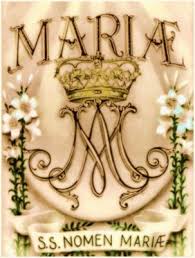
Monday of the Twenty-fourth Week in Ordinary Time
What's in a name?
For the ancients knowledge of a person's name enabled a kind of control over them. This is why YHWH, in the burning bush, would not give Moses his name. You can't try to control me, Moses, as you did the gods of Egypt. A turning point when driving out evil entities is to get the demon to divulge their name. Remember that when you next assist at an exorcism.
Memorial of Saint Peter Claver, Priest
“As the sparrow finds a home and the swallow a nest to settle her young…” (Psalm 84:4a) Maybe this verse from today’s Responsorial Psalm particularly speaks to me now that, as I mentioned in my reflection a couple of weeks ago, my husband and I are considered “empty-nesters.” But I think it’s more than that. The beautiful nest imagery relates to the psalm response, “How lovely is your dwelling place, Lord, mighty God!”
Feast of the Nativity of the Blessed Virgin Mary
“How is your peace?”
The direct Hebrew translation of asking, “How are you?” in English is, “How is your peace?”
Wednesday of the Twenty-Third Week in Ordinary Time
Our Gospel today is Luke’s version of the Beatitudes (Matthew 5), sometimes called the Sermon on the Plain. In contrast to Matthew, Luke includes Jesus’ words of woe alongside his description of blessedness. The dichotomy of blessing and woe provides deep insight into who we are called to be as Jesus’ disciples. Even though a crowd had gathered, Jesus looked pointedly at his disciples as he declared these words. May we today have courage to meet Christ’s gaze and hear him inviting us to examine our interior life and calling us to take steps into more faithful discipleship.
Tuesday of the Twenty-third Week in Ordinary Time
There was a time where due to various family and friends’ illnesses, I’d been around hospitals and doctors a lot. Being ill is no fun, but I’ve noticed two things. First, even though what brought people to the hospital is a physical illness, usually they start wanting to talk about their lives beyond just the illness. Maybe it’s the vulnerability that comes with being sick, but I’ve had a fair number of conversations lately about emotions (being angry or tired of being sick) and relationships (wanting to patch up broken ones). The second thing I’ve noticed is that people pretty much always seem better off--emotionally, spiritually and sometimes even physically—when someone takes the time to pray with them.
Monday of the Twenty-third Week in Ordinary Time
Despite religious leaders collapsing into a frenzy, Jesus heals a deformed man on the Sabbath. Their obsession with the letter of the law trumped the needs of a hurting neighbor, an outcast and a pariah who was probably maltreated throughout his life.
Memorial of Saint Gregory the Great, Pope and Doctor of the Church
For a group that likes to point out the rules of the Sabbath, I would think the Pharisees would just give it a rest and leave Jesus be! As today's gospel reading from Luke showcases - yet again - the most reverent and loyal to the Scriptures were at the same time so distrusting and accusatory to the Son of Man, the Lord of the Sabbath.
Friday of the Twenty-second Week in Ordinary Time
Alright, show of hands, who fancies themselves a wine drinker? I’m more of a beer and bourbon guy but I do enjoy the plethora of clever wine quotes that retailers slap onto t-shirts, kitchen towels, drinkware, and home decor.
- “I cook with wine, sometimes I even add it to the food.”
- “Beer is made by men, wine by God.”
- “Age gets better with wine”
Visiting the Finger Lakes region of upsta
Thursday of the Twenty-second Week in Ordinary Time
“We are opposed to carnal warfare because Christ and his Apostles taught a defenseless doctrine both by precept and example.”
Eastern Amish Mennonite Conference Statement of Faith
With passage of the Selective Service Act on May 18, 1917, Amish and Mennonite men in Ohio (and elsewhere) faced an extremely difficult test of their faith. Yield to the draft, don a military uniform (also contrary to their faith), agree to carrying a gun, and fire it when called upon to do so or resist the draft by refusing to fight or seeking “noncombatant” status.
Wednesday of the Twenty-second Week in Ordinary Time
Today we find the Apostle Paul admonishing the church in Corinth and calling them to grow and flourish in unity as the one Body of Christ. In our Gospel, I see two responses to Christ’s presence and ministry – one that mirrors his love and servanthood and another that is self-seeking and self-preserving. We have an invitation today to answer God’s call to grow in love, servanthood, and unity as Catholic Christians.