Wednesday of the Twelfth Week in Ordinary Time
“Every good tree bears good fruit,” Jesus reminds us in today’s Gospel. Yesterday marked the first day of summer in this year 2022. What a fruitful time of year this is! We see the beauty all around us in lush fields of corn, beans, and wheat, flowering shrubs, glorious flower beds in yards and lovely wildflowers by the roadsides. My husband and I have delighted in darling, white-spotted baby deer frolicking across our lawn with their mamas. The pregnant robins feed hungrily at our bird feeder. Our vegetable garden is exploding to life with the various veggies practically growing right before our eyes. Today, as each of us marvel at the fruitfulness of God’s creation, let it be a reminder to us to examine our own lives and look for the fruit. Disciples of Jesus are fruitful people. We are “good trees” who bear good fruit by God’s grace. If fruit isn’t evident, we’re not living authentically as disciples. May today be a day of conversion for each of us, marked by increased vibrancy and fruitfulness.
Memorial of Saint Aloysius Gonzaga, Religious
Today’s gospel passage from Matthew is one that rightly gives us pause. Wait a second – did Jesus just say that most people head toward destruction and that only a few find the road that leads to life? Does this mean that most of the people I know are going toward destruction? And what does it mean about me? How do I know if I’m on the right path, heading toward the narrow gate?
Monday of the Twelfth Week in Ordinary Time
In today's liturgy we encounter a disaster with no parallel in salvation history---the total destruction of the Northern Kingdom (Israel) by dread Assyria (722 BCE). Only the tribes of Judah and Benjamin remain. Thus begins the legend of the “Ten lost tribes of Israel.”
Saturday of the Eleventh Week in Ordinary Time
One of the positive outcomes of the pandemic is that many people have turned to the great outdoors and nature to find refuge. Today in the gospel reading, Jesus tells His disciples that there is much we can learn through the world around us. The birds and the flowers are dressed in beautiful array and are provided all of what they need from God’s loving providence. Jesus encourages us to grow in our faith and trust in God’s love for all that we need.
Friday of the Eleventh Week in Ordinary Time
Where IS my heart? Where do I want my heart to be? Where is my love, my energy, my attention and focus hanging out? Where do I want it to be? Somewhere where “moth and decay destroy, and thieves break in and steal”? I surely don’t like the sounds of that. That sounds like a recipe for disappointment and frustration, even anger for wasted precious time and resources. And I think that’s what today’s gospel passage from Matthew (6:19-23) has Jesus warning the disciples (and us) about.
Thursday of the Eleventh Week in Ordinary Time
Just the first two words!
Plural Our. Not singular My.
Father… Abba in Aramaic - not distant, but here, close, involved, Dad, Loving Parent.
Wednesday of the Eleventh Week in Ordinary Time
While sitting with the 8th Graders in a summer religious education program a few years ago, we had a discussion about the ways each of us lives our call to faith. The answers were wonderful and mostly straight forward including, obey my parents, be kind to my brother, go to church and praying at meals. One young lady stated that we ought to practice random acts of kindness. Her answer struck me as needing further discussion. So I pushed her to say what she meant by that, she responding with “You know doing kind things for people without expecting anything in return.” I asked her if the people needed to know about who carried out the acts of kindness and she said she liked it better “when it was a secret.”
Tuesday of the Eleventh Week in Ordinary Time
In today's Gospel reading from the Gospel of Matthew we encounter one of the most difficult, if not the most difficult, sayings of Jesus: "Love your enemies" (Matthew 5:44). Loving your enemies is an important part of what it means to be Christian, but it is very difficult.
Jesus acknowledges that His audience has been told before to hate their enemies. For most of us, I think, we could find that much easier to do. Wouldn't it be nice if Jesus said that it was ok to hate our enemies? But He does not. Rather, Jesus says, "love your enemies and pray for those who persecute you." The best examples of enemies are those who are literally at war with one another. What would demonstrate more that people are enemies when they try to kill and torture one another? Most of us reading these posts are probably Americans. Many Americans consider Osama Bin Laden, or the late Saddam Hussein to be/have been enemies. I don't think it's difficult to imagine someone like Adolph Hitler to be an enemy. If these examples don't work for you, think of someone who you could see envisioning as an enemy. And what does Jesus tell us to do to them? Hate and kill your enemies without remorse, bringing the sword of justice to rest where it belongs? No, rather His words are: "love your enemies." In the parallel passage from Luke's Gospel, we find the added: "Love your enemies, do good to those who hate you, bless those who curse you, pray for those who abuse you" (Luke 6:27-28).
These are tough words. Does it mean we need to feel good about our enemies, or think nice happy thoughts about those who have harmed us in some way? No. It means we need to love them. Love is not simply a feeling. Love is an action. Love is selfless, sacrificial. Loving enemies does not mean accepting victimization. It means asking God to help others. It means forgiving. The Christian family who visits the man who murdered their son and offers their forgiveness, who testifies at the court hearing to help the murderer avoid the death penalty (there are many real examples of this), show what this kind of love looks like. Is it easy? No. But the model again is Jesus:
"When they came to the place called the Skull, they crucified him...Then Jesus said, 'Father, forgive them, they know not what they do'" (Luke 23:33-34). Loving enemies is not passive acceptance of wrongs, but active love, a peaceful Christian form of resistance that is powerful indeed. It is not passively accepting the wrong that has been done to us, but actively cooperating with God in transforming the wrong into a healing love that has the power to transform the transgressor. For, when Jesus speaks of loving enemies, He's not primarily speaking about the Bin Laden's, Hitler's, and others whom most of us will never meet, although if we have hatred directed towards such distant people surely it would include them, but rather Jesus is primarily speaking about those with whom we come in contact.
Perhaps "enemy" may even be too strong a word for most of us. Maybe we have no real "enemies." Jesus is telling us to reconcile with those around us. Let's take some time today to pray about who are the "enemies" in our own lives. Perhaps they are family members, co-workers, or someone else. Let's ask God to help us pray for them. Maybe we can take the extra step and try to think of something good we can do for them. Such good deeds are powerful. Perhaps they have hurt us too much to do anything so radical at this point, in which case, we need to pray to God to help us desire to get to the point where we can pray for them, or perhaps desire to desire to get to that point, etc. Most importantly, let us talk to God about our enemies. God knows how we have been hurt and how we feel, but only in bringing our hurts and pains before God can we begin to experience the loving transformation God wants us to experience, so that we can become more like Jesus, the embodiment of divine love.
Jeff Morrow
Memorial of Saint Anthony of Padua, Priest and Doctor of the Church
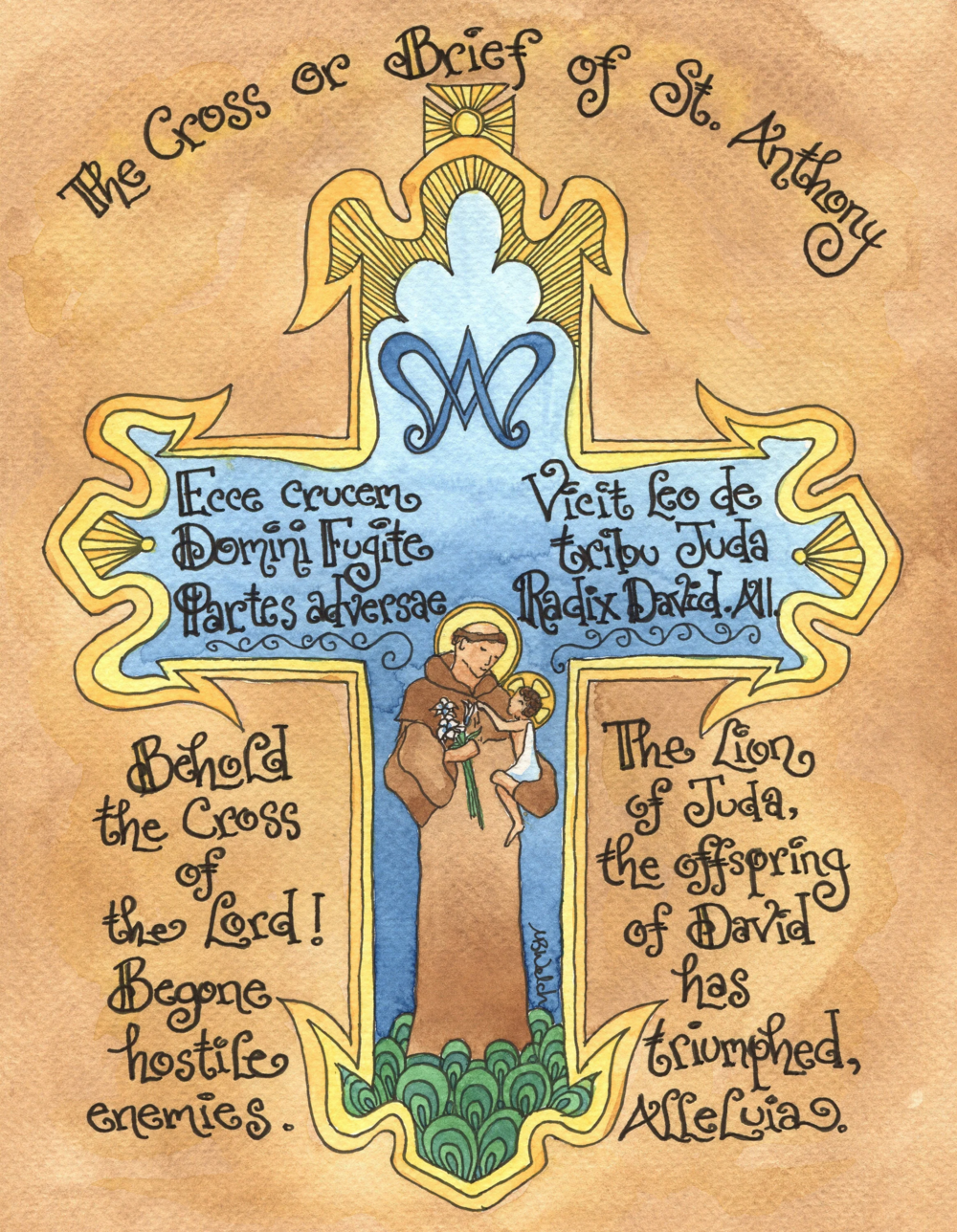
As a boy I would ride the bus with my grandmother on Saturday afternoons so she could go to confession at one of the various churches in the Mahoning Valley. She'd avoid our home parish since her thick Scottish brogue was a dead give away to the confessor, so we'd find our way to one of the “ethnic” parishes where her Gaelic lilt couldn't be so readily recognized---Italian, Polish, Slovak, Hungarian, Croatian, Lithuanian or German. I'm probably missing a couple.
Memorial of Saint Barnabas, Apostle
I remember speaking with some friends shortly after college. We were feeling like we had matured a great deal because we didn’t cuss as much as we once did. As a matter of fact, we were talking about how we would cuss just to add emphasis, to communicate that we really meant what we were saying. We were a work in progress.
Friday of the Tenth Week in Ordinary Time
I love the story from the first reading today where Elijah encounters God in the wilderness. It juxtaposes the fire and brimstone God that is described in the well-known Rich Mullins worship song, Awesome God: “There’s thunder in his footsteps and lightning in his fists (our God is an awesome God).” I’ve written before that most things in our boys’ world focus on superheroes and powers. I often remind them that Jesus’ greatest power is that of his immense love for us--he died on the cross out of great love. Our great and mighty God is good, compassionate, and merciful.
Thursday of the Tenth Week in Ordinary Time
Last weekend, Bill and I headed west on I-70 to Columbus to watch our second eldest daughter participate in a powerlifting competition. Along the way, we passed one of those Ten Commandments billboards. I’ve long wondered what the purpose is of such billboards. You can’t possibly read all ten of the commandments when you’re traveling at 70 miles an hour. I suppose they are meant to serve as some kind of reminder that we are supposed to obey God’s law. If we do, I suppose the reasoning goes, then we are good people and God looks favorably upon us. If we don’t, I take it that we are bad people and can expect to suffer for eternity.
Wednesday of the Tenth Week in Ordinary Time
Our first reading offers an incredible, miraculous story of God’s direct intervention in the lives of God’s people with a mighty display of God’s sovereign power. It’s also a story highlighting the bold, audacious, unwavering faith of Elijah the prophet and his commitment to pursue and follow the true and living God. This story reveals the truth of all our hearts, as well. We are, at times, fickle and faithless. Elijah’s witness calls us “back to our senses,” and invites us to turn from any idolatry and to rededicate our hearts and lives to the eternal God. Our Gospel reveals the eternal nature of God’s Word and invites us to recognize that we are called to obey it as children of the Kingdom.
Tuesday of the Tenth Week in Ordinary Time
Today’s first reading tells us a familiar story. Elijah meets a widow with next to nothing. At his prompting and promise, she extends the little she has as hospitality to Elijah. Because of her hospitality, the widow, her son, and Elijah are able to eat for a year without worrying for food.
Memorial of the Blessed Virgin Mary, Mother of the Church
One of the boys in my classroom at St. X spoke of a time when he addressed his mother as “woman.” As in “Woman, where's my dinner?” She was not amused and he got no dinner. On two occasions in the Gospel of John, Jesus refers to his mother as “woman.” Was he being disrespectful?
Remember that the Gospels are narrative theology and that “Gospel” is its own particular and unique type of writing first promulgated by Mark. “Gospel” literally means “good news.” Stories are meant to reveal, celebrate, inspire, and promote eternal truths and not record strict biography in a 21st century sense.
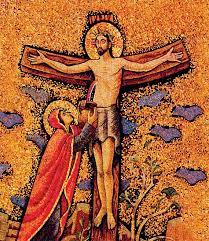
The first time Mary is addressed as “woman” in the Fourth Gospel was at the Wedding Feast at Cana in response to her comment to her son that “they have no more wine.” Jesus responds, “Woman, what is that to me? My hour has not yet come.” The second time is what we hear today, “Woman, behold your son.” They serve as bookends for the rich theology of the evangelist we call “John.”
These two incidents are the only times that Mary appears in John (she is never mentioned by name). Something very significant is going on here. Today we have reached the very heart of the Fourth Gospel for which everything else has been building---the hour of Jesus' glory.
It is most appropriate to today's feast that our first reading from Genesis concerns Eve, “mother of all living,” as Mary is the new Eve of the new creation, book-ended by the wedding feast at Cana in Galilee and by that outcrop of rock outside Jerusalem called Golgatha.
The mystic author of the Fourth Gospel (or maybe “authors,” a Christian school of writers at Ephesus?) ingeniously weaves the narrative. The Greek/Eastern Rite Church calls Matthew, Mark, & Luke “evangelists,” but John they honor with the title, “the theologian.”
Indeed the author of what we call the Gospel of John was a Jewish mystic. It is an amazing work.
Jesus left us two things: the Spirit & the Church---both gifts given in today's Gospel. When Jesus delivers his spirit, a spear is thrust into his side and blood and water flow out. Remember the water turned wine at the very start of the Gospel. Enough wine is created from that water to supply endless banquets.
Both are Eucharistic actions wherein Mary is present. Here the Spirit is given over to the Church, symbolized by the mother of Jesus and the Disciple Whom Jesus Loved. The Church is born of the Spirit. This is John's version of Pentecost, yesterday's solemnity. And Mary is as significant here as she was in Luke's version of Pentecost which we heard from Acts yesterday.
At Cana, Jesus told his Mother that his hour has not yet come---the hour of glory when all is fulfilled and climaxed in him. The “six stone jars” were used in Jewish purification rituals---here they are symbols of the old covenant. The Old Covenant gave us water, the New Covenant gives us wine.
Each stone jar contained over 120 liters of water turned wine, a massive amount. The groom was responsible at Jewish weddings to supply the wine for the guests. Jesus gives us a far greater wine. And as bridegroom of the new covenant he supplies it still. This wine is the highest quality ever tasted and will never run out.
It is from the pierced side of Jesus that all sacraments flow---the water of baptism and the wine of the Eucharist. The wine of the banquet that was the wedding at Cana marks the arrival of the Kingdom---the end time eternal banquet. First century Jewish wedding banquets could last for several days. The messianic wedding banquet is never ending.
Mary and the Beloved Disciple represent those who see, those who respond, those who are transformed. Both are born of the Spirit sharing in the new life that Jesus comes to bring. They are ultimate disciples.
Both figures symbolize the whole church---faithful to the end, awash in baptismal waters and in the blood of the Lamb.
An Easter message extraordinaire on this first day of summer Ordinary Time.
Mary, New Eve, first disciple, and Mother of the Church, pray for us!
Timothy J. Cronin
Saturday of the Seventh Week of Easter
On a recent trip, I attended Mass at a small town in Wisconsin. The Mass was celebrated by a priest and deacon that were both deaf, and they signed the entire service with a woman from the congregation interpreting what they were signing. We came to realize that there was a large community of hearing impaired Catholics that attended this Mass regularly. I had never witnessed a priest signing the Mass before, and I was struck by the beauty and joy that he exuded as he celebrated the Eucharist. On further reflection, I was reminded that each of us have gifts that allow us to share Jesus with others in a unique way. We may feel that there are obstacles that stand in our way, but God can use all circumstances and all people to build the Kingdom.
Memorial of Saint Charles Lwanga and Companions, Martyrs
My father has Parkinsonism. He doesn’t have Parkinson’s Disease but a condition with similar debilitating symptoms. Part of that for him has been a gradual loss of mobility over the past several years. As a man who was a runner (even ran a marathon) and who loved going for walks and hikes in the woods, this has been particularly challenging. And difficult for the rest of us who love him. This is not how any of us imagined it would be for him in his “golden years” with my mom.
Thursday of the Seventh Week of Easter
Have you ever grown weary of fighting the good fight? Have you repeated your message and marched for your cause repeatedly, only to feel that your words and actions seem fruitless? No headway, no progress in our desire to overcome evil with good?
Memorial of Saint Justin, Martyr
Today’s Gospel presents us with the first part of Jesus’ “High Priestly Prayer,” offered for his disciples as he prepared to go to the Cross. This pastoral prayer was not intended only for Jesus’ immediate followers, but for all disciples throughout time. I invite us to enter into today’s Gospel as if Jesus is praying for us personally, literally face to face. In today’s first reading from Acts, I see an invitation for us to pray for our priests. Let’s seek the Lord together, receiving his intentions for us and lifting up those who shepherd us.
Feast of the Visitation of the Blessed Virgin Mary
Today, we celebrate the feast of the Visitation, when Mary went to visit her relative Elizabeth, who the angel Gabriel had told Mary was also with child.