Memorial of Saint Francis Xavier, Priest
Have you heard God speak to you? If so, have you listened to what was said and followed those directions? Today’s readings challenge us to realize that God does in fact speak to us and calls us to do many things. During this time of Advent, we are invited to reflect on how we can be better listeners and become laborers for the Kingdom of God.
Friday of the First Week of Advent
Around the start of the pandemic I began taking sunset walks pretty regularly and discovered something about myself. If I watch the sky slowly darkening at sunset or just after sunset beginning with dusk, then I don’t mind the shortening of the days as much as I used to. If I witness its beauty, especially observing the change that comes with day closing into night, then I’m much more at peace the rest of the night. Occasionally hearing an owl or glimpsing deer or witnessing a great heron fly home for the night, it’s become something I look forward to. And at this time of year, for me, it’s become connected with the waiting and watching of Advent.
Feast of Saint Andrew, Apostle
Today is the Feast of St Andrew, Apostle. He and his brother Simon Peter were the first men whom Jesus called to be his disciples. Jesus summoned Andrew by name and called him to the vocation of Apostle. After Jesus’ Resurrection, Andrew was sent by God into specific areas to evangelize. It is no different for us! Jesus calls each of us to be his disciple and sends us into the world to share the Good News with others in our spheres of influence. Let us ask St Andrew’s intercession today for the graces we need to be bold, confident, and grateful witnesses to God’s love, mercy, and grace.

Monday of the First Week of Advent
The 2022 version of Ebenezer Scrooge loves Christmas. As owner of the mega-discount chain Ebenezer-Mart, he can’t get enough of it.
Saturday of the Thirty-fourth Week in Ordinary Time
Today marks the vigil of the first Sunday of Advent and the new liturgical year. And rightly so, we are given a gospel reading highlighting the need to be “vigilant at all times.” Because…… how did we get to Advent already?! Where did this snow come from?! Why is it so dark outside?! In preparation for this reflection, I had to double check the dates and liturgical calendar. I guess my reaction is very fitting for the message taken from today’s gospel. I need to wake up!
Friday of the Thirty-fourth Week in Ordinary Time
Beware! The end is coming! Jesus tells us today, “know that the Kingdom of God is near” (Lk 21:31b). For us Catholics, we are literally coming to the end of our liturgical year. For a smart-alec like me who enjoys pushing back on popular culture, you might find me telling everyone ‘Happy New Year’ in a couple of days! ;) I cannot wait for the confused look that students at CJ will give me. While we are experiencing the end of a liturgical cycle, the last couple of weeks, our readings have focused on the end times; not just a flip of the calendar, but actually the end of the world. In the Gospels, Jesus has been sharing his final discourse. In revelation, John shares his elaborate and fantastical visions.
Thanksgiving Day
Every now and then (it doesn’t happen a lot), a student will take the time to write me a thank you note at the end of the semester or after they have finally submitted their Honors thesis. I always do the same thing with such cards. I save them. I put them in a drawer in my desk so that the next time I’m feeling discouraged, I can pull one or two of them out of the drawer. After reading just one of those notes, I feel a rush of gratitude that gives me new perspective on whatever was getting me down.
Wednesday of the Thirty-fourth Week in Ordinary Time
We, the Church, the Body of Christ, process toward the end of this liturgical year. On Sunday, we celebrated the Solemnity of Christ the King, and this coming Sunday begins Advent. In between these two significant Sundays, our readings keep us in the end times, anticipating Christ’s return and the celebration of his Advent. The scriptures from the last couple weeks have reminded us to be prepared, prayerful, and penitent as we await the coming and return of our Lord and King, Jesus Christ. Today’s Gospel assures us, “By your perseverance you will secure your lives.” Today let us focus on God’s promise of wisdom during persecution, and the confidence we have as God’s creation, “great and wonderful.”
Memorial of Saint Cecilia, Virgin and Martyr

Memorial of The Presentation of the Blessed Virgin Mary
As we conclude liturgical year “C,” the last week has featured the Book of Revelation. No book of the Bible is more misunderstood or more widely misused.
Saturday of the Thirty-third Week in Ordinary Time
Every time we pray the Nicene Creed we close by saying, “and I look forward to the resurrection of the dead and the life of the world to come.” We finish this creedal statement focusing on the hope of our eternal future with God. Although I profess these beliefs regularly at Mass, these concepts of resurrection and life after death are hard to comprehend. Both of today’s readings refer to the resurrection, and therefore invite us to reflect on what this means for us as Christians today.
Friday of the Thirty-third Week in Ordinary Time
Have you ever eaten food that tastes so good, so sweet on the tongue, but it leaves a sour, hard-to-digest feeling in your stomach? That’s what we hear about today from the book of Revelation (10:8-11). Only it’s not food that the author is tasting, it’s a small scroll. Yes, a scroll with words written on it that tasted “as sweet as honey,” but “sour” in his stomach. We also hear about words in today’s gospel reading (Luke 19:45-48). Jesus’ own words and the words he was quoting from Isaiah. Words that were sour to those he was driving out of the temple area, yet sweet to others, as we read, “all the people were hanging on his words.”
Memorial of Saint Elizabeth of Hungary, Religious
In both today’s first reading and today’s gospel, our passages open with weeping. The gospel passage from Luke describes Jesus’ reaction to seeing the city of Jerusalem. It is clearly a city that Jesus loves, and filled with people for whom Jesus has great compassion. Here Jesus seems to be prophesying about the destruction of Jerusalem which was to come forty years after his own crucifixion. Notice that Jesus does not in any way delight over the impending destruction of the city that failed to recognize him as their Messiah. Rather, he weeps, the most human sign of sorrow. In the verses which follow today’s selection from Luke, we learn that the chief priests, scribes, and leaders are seeking to put Jesus to death. The irony is that while Jesus is weeping for the people, the people are ensuring this impending destruction by their choices. And yet, salvation works through this situation, both through the destruction of Jerusalem and the crucifixion of Jesus. The final story is not one of defeat, but of triumph.
Wednesday of the Thirty-third Week in Ordinary Time
Have you ever been to Heaven? Sit with that question for a moment. Have you ever been to Heaven? I’m assuming that most, if not all of you, answered “no,” perhaps even with a parenthetical (well that’s a silly question!). I would counter, yes, you have – you have been to heaven! We enter the eternal, heavenly worship every time we participate in the Mass. Our first reading today from Revelation gives us a glimpse of what we experience in each Eucharist. I pray that we might be inspired today to approach each Mass with the same kind of awe, reverence, joy, and ecstatic praise that John the Apostle describes. I pray also that this heavenly worship transforms our everyday lives into heavenly worship as we offer our whole selves in service to God and neighbor.
Tuesday of the Thirty-third Week in Ordinary Time
The readings for this week look forward to the Solemnity of Christ the King on Sunday. The theme expressed in them is repentance at the expectation of Christ’s coming. In the first reading, the writer of Revelation warns the churches not to be lukewarm but rather to remain steadfast in faith. The metaphor of the undesirability of what is lukewarm is one that most people can appreciate. In warm weather it is natural for people to drink cold beverages to slake their thirst. And conversely, in cold weather people drink warm beverages to warm them from the inside after they’ve come in from the cold. The problem with lukewarm beverages is that people do not find them to be refreshing either on cold or warm days. No one wants to drink lukewarm soda, or coffee once it has cooled off.

Monday of the Thirty-third Week in Ordinary Time
“What do you want me to do for you?”
The road to Jericho was an entryway toward Jerusalem streaming with pilgrims. Beggars sat along the way hoping for handouts. On this particular day sat blind Bartimaeus, who’s name means “son of fear.” And Jesus of Nazareth was passing by.
Memorial of Saint Josaphat, Bishop and Martyr
Within the parable of the judge and the widow today, there lies a question that may deeply trouble us Christians in the world - if the Son of Man (Jesus Christ) were to come to earth today, would he find faith among his people? Some may positively look at their own faithfulness while others may negatively look at the declining religiosity around us. But my take is to not feel the need to answer yes or no. Instead, we must answer this with our daily efforts to bring faith alive in our own hearts and the hearts of others.
Memorial of Saint Martin of Tours, Bishop
The past several months leading up to election day earlier this week were filled with consistent reminders of the division and hatred that engulf the political landscape of America. The second letter from John today reminds us of the priorities in Christian life to love one another and walk in the ways of Christ. Be on the lookout for heresy and deceit. Stay focused on the truth. What is that truth? The inseparable link between loving God and loving one another. We don’t get to pick and choose. We are commanded to love because God first loved us; God is love and therefore, the only appropriate way we could possibly respond is to pay that love forward.
Memorial of Saint Leo the Great, Pope and Doctor of the Church
When Bill and I stay overnight in a hotel we like to end the day by flipping through the channels to see if there’s anything worth watching. We don’t have a TV in our bedroom at home, so this always feels luxurious to us. When we do this, we inevitably come across some televangelist getting red in the face about all the signs in our world today pointing to the End Times and Jesus’ imminent return.
Feast of the Dedication of the Lateran Basilica in Rome
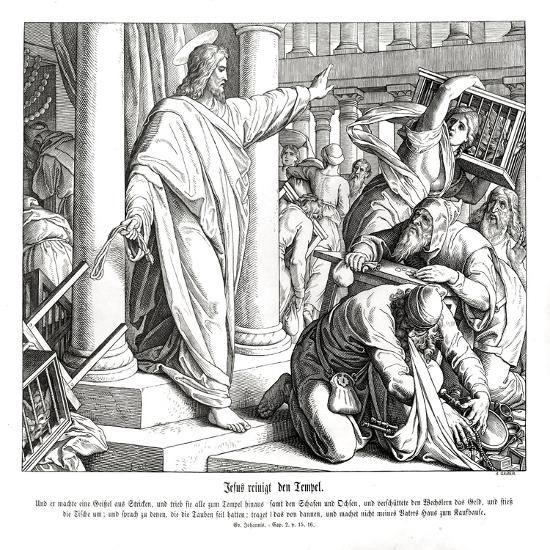
Mark was the first to write a narrative of “the cleansing of the Temple.” He places the incident after the “triumphal entry” of Jesus into Jerusalem. Matthew & Luke follow suit.
Scholars contend that these events put a target on Jesus’ back.
Jerusalem is a tinderbox on important Jewish feasts like Passover and Jesus had just struck a match in the Temple incident.
It was the responsibility of the Jewish high priest, in this case Caiaphas, to alert the Roman authorities if there was a troublemaker making noise.
Sadducees like Caiaphas walked on eggshells, knowing what Rome was capable of if there was a riot. And procurator Pontius Pilate, with a reputation of absolute ruthlessness, would “take no prisoners.” Pilate disdained the Jews on a level far beyond hate. Tiberius would eventually remove him as procurator of Judea because of his many atrocities against the Jews.
We have come to call the incident in the temple its “cleansing.” Scholars contend that it is as historical an event as anything in the Gospels. But is “cleansing” really what Jesus wanted to do?
Some suggest that he was symbolically eliminating the Temple and replacing it with the Kingdom of God. The Jesus movement was all about God’s reign. “The Kingdom of God is within you.” Why need a Temple then?
Today we hear John’s version of the Temple incident and he places it not in Holy Week but rather at the very start of the Lord’s ministry.
A generation prior to John’s Gospel, Paul wrote to the People of God at Corinth: “You are God’s building.” And our foundation is Jesus Christ. Apt words for Catholics these days in our time of closings and mergers of parishes, churches, and schools. And even Dioceses.
Feelings are facts. Grief and loss are real. Heartbreak, too. The destruction of the magnificent wonder-of-the-world Jerusalem Temple by Titus and his legions in 70 CE had the weight of a thousand nuclear explosions. Still the faithful Jewish people continued on. And so will we once the dust is settled.
For Christ is our foundation and we are the temple.
-Timothy J. Cronin