Tuesday of the Fourth Week in Ordinary Time
Today’s Gospel is a favorite of mine. It’s an example of how Jesus’ compassion is inclusive. This is a time when his contact with a corpse or with women who were bleeding would have made him as a Jewish teacher ritually unclean. And yet Jesus takes the hand of a dead girl to raise her up and heals the woman calling her “Daughter.”
Monday of the Fourth Week in Ordinary Time

Today we recall Blaise, fourth century Armenian bishop and martyr, intercessor for illnesses related to the throat.
Saturday of the Third Week in Ordinary Time
The theme that runs through today’s readings is faith. The writer of the Hebrews in the first reading describes faith as “the realization of what is hoped for and evidence of things not seen,” (Hebrews 11:1). Then the writer demonstrates how Abraham exemplified this definition. He traveled away from his home not knowing where God was leading him. Abraham had faith that God would give him and his wife Sarah a child even though they were both old. He then offered up his only child Isaac not knowing that his son’s life would be spared. In the Gospel, Jesus calms the storm while he and his disciples were on a boat. Then he rebukes them for having little faith by asking them, “Why are you terrified? Do you not yet have faith?” (Mark 4:40). What do these stories tell us about having faith today?
Memorial of St. John Bosco, Priest
I’m pretty much the only one in our house who uses mustard, and even so, I really only put it on hotdogs, brats, and burgers–and not without ketchup and relish to go with it. Our kids pretty much unanimously oppose the use of mustard for any reason minus Cecilia, who, on occasion, will randomly state that she wants it on her hotdog. Therefore, you might find it quite ironic that one of our favorite meals in the house is a dish called Chicken Dijon (though the true mustard flavor is heavily masked by lots of butter and breadcrumbs, and baked deep into the chicken at 350 degrees). Strange people we are in the Meyer household. Nonetheless, Jesus’ parable of the mustard seed in today’s gospel is a compelling example for our understanding of faith.
Thursday of the Third Week in Ordinary Time
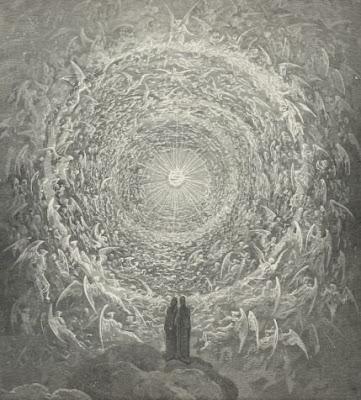
"This is the people who long to see your face” — today's responsorial from Psalm 24.
Goals. The word used to drive me crazy. As a teacher for nearly 40 years, we were required to submit 3 goals to the principal every fall at the start of the new school year. In all honesty, I wasn’t sure what the previous year's goals were and whatever they were I should just repeat them (and often I did) because obviously I didn’t follow through.
Wednesday of the Third Week in Ordinary Time
As a teacher myself, this Gospel is one of those moments when I feel very connected to Christ the teacher. In today’s Gospel, Christ uses this beautiful parable of the sower and the seed to help illustrate the various paths the Word of God can take when spoken into the world. Christ outlines the four ways in which people respond to His message. I love this parable and the comparisons it draws, but that was not my favorite part of this gospel.
Memorial of St. Thomas Aquinas, Priest and Doctor of the Church
Our Scriptures today speak about doing God’s will, as an important way of loving God and of establishing us as a family of faith together. The psalm response is an enthusiastic offering to God - Here I am, I come to do your will, beckoning us to be open to the core of God’s call to respond with openness and love. And in today’s Gospel - Jesus puts the ties of those who hear the word of God, and live it out as his true sisters, brothers and mother! What a reminder to those of us bonded in our church families through our diversity of age, culture, language and experiences. We are truly sisters and brothers in Christ.
Monday of the Third Week in Ordinary Time
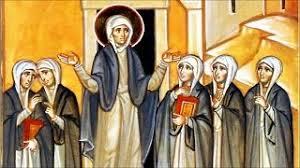
Sing to the Lord a new song. For he has done marvelous deeds! Psalm 98:1
Today we recall Ursuline founder Angela Merici, once the largest teaching order in the world. They took a different direction after Vatican II when congregations were encouraged to reassess their missions in light of the original charisms of their founders.
Feast of the Conversion of St. Paul, Apostle
One of the Marianist Sisters I live with is a college professor. An assignment that she gives to her students is a spiritual autobiography. They write an essay about their religious/spiritual journey starting with what religion or spiritual practices they had growing up to their spirituality today. Today’s first reading is, in a sense, Paul’s spiritual autobiography. He recounts his religious upbringing and how he came to know Jesus and became baptized. His story can inspire us to reflect on our own journey of faith.
Memorial of St. Francis de Sales, Bishop and Doctor of the Church
I found today’s gospel reading for the feast of St. Francis de Sales (John 15: 9-17) to be both beautiful and challenging. Jesus is speaking to his disciples about his love for them, the invitation to “remain” in that love, and the joy that comes as a result. As followers of Jesus, we are called to remain in his love as well. And to keep his commandment, which is stated twice in this reading, and is simply this: “love one another.”
Thursday of the Second Week in Ordinary Time
Today’s scripture reading highlights how Jesus was often surrounded by crowds during his ministry. Sometimes these gatherings were so large that people had to find other ways to access Jesus. For example, they opened up the roof of a house to lower a person to be in Jesus’ presence. What were the reasons that people thronged to see and hear Jesus, and would we be a part of that crowd?
Day of Prayer for the Legal Protection of Unborn Children
In today’s Gospel we see Jesus healing a man with a withered hand. This encounter takes place in the Synagogue with religious leaders, the Pharisees, closely observing and critiquing. Jesus is both angry and grieved by these men of God and their posture toward him and the man in need. Jesus’ emotional response to the situation moves me deeply. Let us ask the Lord to heal our hardened hearts so that they might become softer, more pliable, and more profoundly receptive to the Lord.
Memorial of St. Agnes, Virgin and Martyr
I’m not often good at keeping Sunday as a day of rest and reflection. I get too caught up in preparing for the week, and distractions every Sunday. I might take moments of rest, but I certainly fall short in taking the opportunity to pray and reflect in addition to that rest. I put so much work into being prepared for the logistics of the week (meals, laundry, email, etc.) that I fail to recognize how God is with me in those preparations and how God might walk with me in the week to come. I become disillusioned to the fact that in some ways “Sabbath” calls us to actually do work – prayer can certainly be restful and rejuvenating but it also means putting in the work to grow with God.
Monday of the Second Week in Ordinary Time
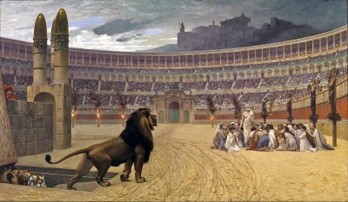
“They learned obedience from what they had suffered…” Hebrews 5:10
Today we commemorate three martyrs: Fabian (250 CE), Sebastian (300 CE), and Martin Luther King (1968 CE). Fabian & Sebastian were martyred only 50 years apart. King’s death 1,600 years later reveals that the age of the martyrs will not end until the Lord Jesus himself returns in glory.
Saturday of the First Week in Ordinary Time
Today’s first reading and Gospel both have the theme of forgiveness and mercy. Jesus said that he came to call sinners, and the letter writer to the Hebrews writes that because Jesus lived among us, he understands what we go through in life; therefore, we can ask God for mercy. We are not doomed to live in the mire of our sinfulness. If Jesus can call and choose to be with tax collectors and other despised people, there is hope for us. Forgiveness and hope are connected to each other.
Thursday of the First Week in Ordinary Time
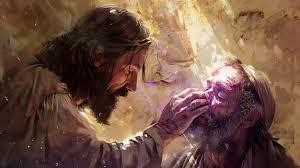
One of my first introductions to the parish was my presentation of a series on Mark, entitled “Wild & Untamed: Encountering the Jesus of Mark.” It wasn’t the first time I have lived intimately with this Gospel. I led several parish missions on Mark including one at St. Helen back in the 90s. I also had the opportunity to teach a course on Mark at Xavier University.
Memorial of St. Anthony, Abbott
How much did Santa pay to park his sleigh? Nothing, it’s on the house. If you are like my kids, they just sigh and say in a long, drawn out tone, “Daaaddd” (eye roll included). Full disclosure, the joke is borrowed from the small calendar that sits on my desk in my office which offers a daily dad joke. Nonetheless, being fresh off the Christmas season, today’s Gospel caused me to think of Santa Claus. While Santa may be a legendary character loosely based on the actions and deeds of a Catholic bishop from centuries ago, it is in fact the faith, works, compassion, and love that is rooted in this idea of Santa that draws so much power toward his persona. Santa is a man of mighty and magical good works. Likewise, our psalm reminds us, “Do not forget the works of the Lord!” (Ps. 78:7b) And, though this is quite a bit of a stretch, how much did the paralytic have to pay to be healed by Jesus? Nothing, it was, as they say, on the house.
Wednesday of the First Week in Ordinary Time
Today’s first reading, from Paul’s letter to the Hebrews, highlights Christ’s compassion for His people. He, who is fully divine, humbled himself to also be fully human. Fully human means that he shares in our same struggles and challenges, our same joys and sorrows. He is not a God who we cannot relate to and connect with. Rather Paul tells us that “because he himself was tested through what he suffered, he is able to help those who are being tested” (Hebrews 2:18). There are many times I have felt tested – tested in my patience, in my faith, in my compassion. What a beautiful gift that we can turn to Christ for help in those moments.
Tuesday of the First Week in Ordinary Time
Today’s first reading is from the Letter to the Hebrews. Scholars debate over whether or not this letter was actually written by Paul or by someone else, mainly because it seems so different from the other letters we are used to reading and hearing. Today’s excerpt is a bit complicated but it is rich and actually quite beautiful in its message. It asks the question about the difference between humans and angels, saying that it was humans to whom God “crowned with glory and honor.” The is an old Jewish story that when God made Adam, he presented his creation to the angels, telling them to bow down in worship of the image of God Adam bore. This letter evokes the same feeling of the absolute dignity and worth of the human being.
Monday of the First Week in Ordinary Time
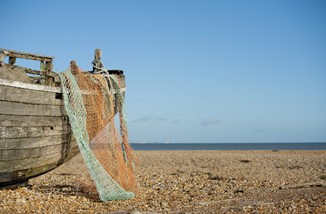
He walked along a little further and saw James, the son of Zebedee, and his brother John. They were mending their nets. Then he called them, so they left their father Zebedee in the boat and followed him.
Mark: 1:19-20
Today features the call of Jesus' first disciples: Peter, Andrew, James, and John. This is the moment when Christ’s upside-down kingdom begins.