Tuesday of the Second Week in Ordinary Time
In our first reading, Samuel has called the whole town of Bethlehem together for a banquet. Everyone is supposedly there, including Jesse and his sons, one of whom will be the next king. The sons are dressed up and looking their best. But the Lord reminds Samuel, and us, that the outward appearance is not an accurate way to judge.
Monday of the Second Week in Ordinary Time
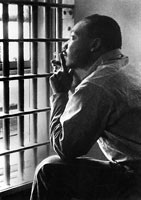
Today we hear in Mark that some religious leaders in Jesus’ day refused to budge when it came to the law. Even when the law makes no sense or was oppressive, the law, for them, became even more supreme.
On this holiday we remember the voice of a prophet named Martin Luther King, Jr. Like Jesus, he refused to accept law without question, arguing that there are bad laws as there are bad men.
Memorial of St. Anthony, Abbot
As I sat down to prepare this reflection, what immediately jumped out at me from today’s Gospel is the question posed to Jesus’ disciples by the Pharisees, Why does he [Jesus] eat with tax collectors and sinners? You and I, we are the tax collectors and sinners. Quoting Psalm 14, St Paul tells the Romans, “None is righteous, no, not one” (Rom. 3:10). We are all sinners. I invite you to put yourself in Levi’s shoes as you pray and meditate upon today’s Gospel and ask yourself, why does Jesus invite me to his Table? The answer is life-giving!
Jesus came to get his feet and hands dirty, to smell like the sheep he came to shepherd, to take on himself all the gritty, grimy, filthy reality of the fallen human condition. The Incarnation is all about Jesus becoming like us (in every way but sin) so that through his Paschal Mystery we can become like him in his divinity. Last Sunday we celebrated the Feast of Jesus’ Baptism, where he entered the muddy waters of the Jordan, already polluted by the sins of the people coming to John for baptism. Jesus immersed himself in the chaotic, contaminated water because of his unfathomable mercy; his limitless, sacrificial love plunged him into the murky depths so that his divinity could purify it for us. This is incredible love!
Why does Jesus eat with tax collectors and sinners? Because he loves us. Pure and simple. Jesus eats with us, fellowships with us, hangs out with us, and restores us to covenant relationship with the Father because he loves us and wants to lead us home to be with the Holy Trinity forever.
Why does Jesus eat with tax collectors and sinners? Because we need to be healed/saved. Overhearing the query, Jesus responds, “Those who are well do not need a physician, but the sick do.” Already in Mark’s Gospel, Jesus has displayed his power to heal the sick. But the sick referred to here are the tax collectors and sinners! The most crippling ailment we can ever experience is sin. As God says through the prophet Hosea to Israel, “I will heal their faithlessness; I will love them freely . . .” Hos. 14:4. Jesus demonstrates to us that he is indeed the Divine Physician. God wills and works for what profits us for salvation; we must admit our abject need and turn to the Lord asking him to heal us of our sin. Through the Sacrament of Reconciliation, God not only forgives our sins but brings deep healing to our souls, minds, and bodies as we yield to his merciful work within us.
Why does Jesus eat with tax collectors and sinners? Because Jesus wants to restore us to divine fellowship. Our sin separates us from God, and Jesus longs that you and I might enjoy joyful, free, and intimate fellowship with him and the Father and the Holy Spirit. Jesus further clarifies his response, “I did not come to call the righteous but sinners.” His call is the invitation to the Messianic banquet. Jesus points forward here to the Eucharist, the ultimate feast, the dinner that he hosts for all of us sinners redeemed by his blood. Does Jesus imply that the morally upright are not included in his call? No, the key here is that we are all sinners, none is righteous, and we must admit and own our sinfulness, our unrighteousness. If we behave like Pharisees, considering ourselves worthy and “those other sinners” to be unworthy, we exclude ourselves from Jesus’ call, his invitation to his Table. Let us not ever deceive ourselves and so refuse Christ’s medicinal grace. Jesus did not come to vindicate those who faithfully kept the Law and exclude everybody else. We all need to be healed from the devastating effects of sin. And to those of us with pharisaical tendencies, a word of hope: Jesus came to heal the sickness of pride and judgmentalism, too!
We might spend time today contemplating Christ on the Cross. Behold his immense love for you; consider the extent to which our pure and divine Savior was willing to dirty himself with our humanity and to die a brutal death for our sake; pour out your gratitude and thanks to him, express your love back to him. And when you go to Mass this weekend, celebrate the Eucharist like never before, marveling that Jesus wants to eat with tax collectors and sinners.
I’ll see you in the Eucharist,
Elizabeth Wells
Friday of the First Week in Ordinary Time
Have you ever gone to an event that is so crowded that you can’t even get in the door? Were you discouraged and decided to leave? Persistent and hopeful that you might still get in or at least catch a glimpse or hear a little from where you were standing? How motivated were you to find another way in? Motivated enough to have your friends break through the roof and lower you down?! Today’s gospel reading from Mark (2:1-12) invites us to reflect on our place in the story of the paralyzed man who was lowered through the roof of the home where Jesus was preaching.
Thursday of the First Week in Ordinary Time
Although out of season, Washington Irving’s The Legend of Sleepy Hollow names the hapless central character Ichabod Crane, (a biblical name meaning the glory is no more). Irving may have gotten that name from 1 Samuel 4, which we hear today, wherein the son of a priestess is given that unholy name due to distress and fear. God, it would seem, had abandoned his own — all because the Chosen People had descended (or tried to) into a relationship of “mutual manipulation” with the One who chose them! In 2026 it is highly unlikely for sons to be named Ichabod. Washington Irving saw to that!
Wednesday of the First Week in Ordinary Time
God wakes us from our sleepiness and calls our name. This is Samuel’s experience in the temple. Samuel, who was already “a minister to the LORD,” and yet lived in a time when “a revelation of the LORD was uncommon and vision infrequent.” I wonder, was God infrequently revealing God’s self to the people? Was God not speaking and showing who God is and the path the people were called to walk?
Tuesday of the First Week in Ordinary Time
The first reading and the Gospel reading do not necessarily have to be connected to each other, and that seems to be the case in today’s readings. However, I found that they both have prayer in common. What can today’s readings tell us about prayer?
Monday of the First Week in Ordinary Time
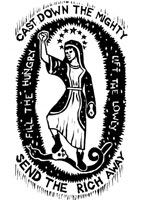
Today we hear Hannah's story in 1 Samuel (1:1-8), a tale of anguish as she is taunted for her barrenness. She fears that the Lord has rejected her. But the Lord works in his own time. Eventually she is gifted with a son, Samuel, the last of the judges and the first of the prophets in Israel.
Saturday after Epiphany
In these days of the digital revolution in which new technologies (dare I mention AI) come and go, shift and change, transform and re-align our lives on what feels like a daily basis, it’s fun to think about the time of Jesus when writing was a relatively new technology—just about 500 years old. And, in its youth, Greek writing didn’t bother to separate words, never mind include a comma. What this means for translators of our sacred scripture is that they have to figure out where the breaks and punctuation should go, so that we don’t have to work so hard to make sense of it.
That being the case, consider the closing sentence of the reading from John’s Gospel for today: “He must increase; I must decrease.”
Friday After Epiphany
My young adult son recently went on an adventurous camping trip with friends in Big Bend National Park and Guadalupe Mountains National Park in Texas. Desert and mountains in a fairly remote area, they had the somewhat rare experience of being outside of cell service much of the time. Although less concerned about his safety than if he had been alone, I was thankful he was able to be in touch with us on a daily basis. I was also thankful he could have a mostly “off the grid” experience in nature.
Thursday After Epiphany
Today’s readings highlight the concept that the Bible is a gathering of many stories in order to tell one central story- God loves us and invites us to love in return. When we listen with open hearts, we can understand and experience this love story that has no end. God’s love then impels us to go forth and do the same.
Wednesday After Epiphany
In the prayerful reading of scripture called lectio divina, we are invited to pause when a word or phrase speaks to us. Pause and ponder. “Beloved.” We might easily move past this word, but it catches me almost every time. Beloved. This simple word is used six times in the short first letter of John. Six times, John addresses us, “beloved.” Pause and let that soak in. We are God’s beloved. Yes, you and I, each of us, and in a special way as the body of Christ here on earth, all of us together are the Beloved of God.
Tuesday after Epiphany
The mountains shall yield peace for the people…justice will flower (Psalm 72)
Today’s Scriptures offer the post-Christmas promise of its mysteries flowering and bearing fruits in our lives with peace and justice, and faith in action. It is a good day to reflect back on what of the Christmas Scriptures and stories have touched us and what do we wish to carry forth? We can especially reflect on St. Joseph’s faithful yes to dreams and his steadfast companionship of Mary and the vulnerable child Jesus through the eyes of Saint André of Montreal (1845 - 1937), this North American saint, deeply devoted to St. Joseph - his trusted friend and guide - that the global church remembers today.
Memorial of St. John Neumann, Bishop
A friend of mine used to get a serious case of the Christmas blues. January 2 brought on the hardest time of the year, as she considered New Years the end of “the holidays.” A few Januarys ago she decided to stop fighting it and, as she put it, allow the season to fade away naturally. Try as she might, she couldn’t shake it. Christmas (for her anyway) was over and in the midwest all we had to look forward to were months of the chill and ice and the dread of winter.
Christmas Weekday
Our Gospel today continues the story of John the Baptist and his ministry as prophet and witness to our Lord Jesus Christ. We read, “The next day he [John] saw Jesus coming toward him . . .” And then we receive John’s stunning words, “Behold, the Lamb of God, who takes away the sins of the world.” I wonder if you’ve ever stopped to fully consider the eternal significance of this earth-shattering statement and its implications for you, personally, as well as for all of humanity.
Memorial of Saints Basil the Great and Gregory Nazianzen, Bishops and Doctors of the Church
Today is the feast day for two theologians, Basil the Great and Gregory of Nazianzus. The two were friends, along with Basil’s brother Gregory of Nyssa (whose feast day we observe on March 9th). These are saints that are more familiar to our Eastern Orthodox brothers and sisters, but they are very important for both Eastern and Western Christianity. Saints Basil and Gregory are particularly remembered for the ways they helped develop Trinitarian doctrine so that we could understand it better.
Solemnity of Mary, the Holy Mother of God
The Octave Day of the Nativity of the Lord

It was the time of day that determined when blessings and prayers were offered in the synagogues of the first century. Today, we hear that same beautiful “priestly” blessing (from Numbers) which began and ended each day:
The LORD bless you and keep you;
The LORD let his face shine upon you and be gracious to you;
The LORD look upon you kindly and give you peace.
The Seventh Day in the Octave of Christmas
The ancient desert fathers and mothers were known for their wisdom. Christians desiring to deepen their relationship with Christ would seek them out. “Give me a word,” they would ask the abba or amma. This word would be a small piece of scripture, sometimes just a phrase, to ponder for years or more. The word was chosen specifically for each individual seeker.
The Sixth Day in the Octave of Christmas
As I reflect on today’s readings, I find myself thinking about Anna the prophetess, who was in the Temple during Jesus’ presentation. She is mentioned in only one brief paragraph in the entire Bible, yet there is so much packed into it. We learn that she was from the tribe of Asher and had been widowed at a young age. Afterward, she seemingly went to live in the Temple, praying day and night and never leaving. We do not really know how she came to be there, what her life was like before, why she chose never to leave, or whether other widows did the same. Yet the Gospel writer chose to include her in the story of Jesus. Why?
The Fifth Day in the Octave of Christmas
T.S. Eliot’s “Murder in the Cathedral” tells of the Archbishop of Canterbury's (Thomas Becket, 1120-1170) defiance of the King (Henry II) as an example in the ongoing tension between the Kingdom of God and the Kingdom of the world, between the things that are God’s and those which are Caesar’s. It is not simply an accident that three martyrs' feasts (Stephen, the Holy Innocents, and Becket) are kept as the first feasts of the Christmas season. Even the vesture of the church startlingly transforms from the celebratory white/gold of the coming of Christ, who is all, to a martyr's blood red who gave all.
Yesterday was the feast of the Holy Innocents, a timely reminder that the innocent throughout time have suffered at the hands of worldly powers. The ultimate innocent victim is, of course, the crucified Christ. But the Holy Innocents serve as prophets of the doom that eventually awaited the Christ Child on the Mount of Doom we call Golgotha.