Monday of the Twenty-second Week in Ordinary Time
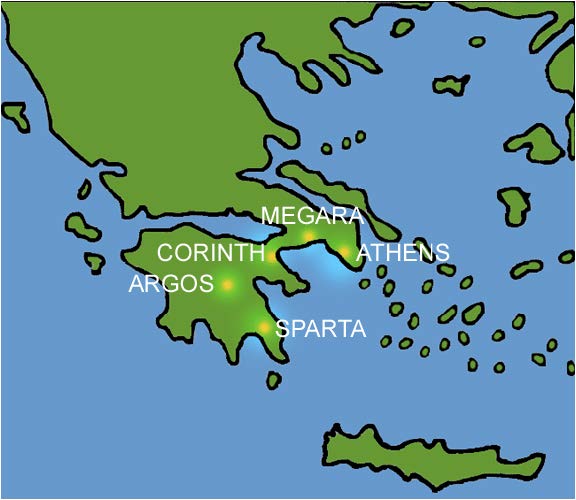
We encounter a humble and affectionate Paul in our first reading today from I Corinthians. He writes to his foundling community that he hadn’t come to them with “persuasive words of wisdom.” (He may be referring to the so-called wisdom of the Greek philosophers, as he had recently been to Athens.) He adds that faith must not depend on human wisdom but rather on the power of the cross.
He writes in “weakness and fear and much trembling” — a demonstration not of human power, no matter how respected and revered the Greek philosophers were, but rather the “folly of the cross.”
Pleasure was the modus operandi of Corinth. Enhanced by its setting between two seas, the city was filled with all kinds of depravity. It had a thriving sex trade, a reputation largely driven by its geography as a major port city, its diverse and transient population of wealthy sailors, and the cultural influence of the temple of the goddess Aphrodite. She was the goddess of sexual desire and lust. She was Corinth’s bread and butter.
Paul preached Christ crucified — “the power and wisdom of God,” not just by his lips but by his life, having suffered together with Christ to such an extent that he wrote the Galatians just a few years before, “I have been crucified with Christ and it is no longer I who live but Christ who lives in me.”
He invited the Corinthians, whom he wished to “know nothing…except Jesus Christ and him crucified,” meaning not just to know about Christ crucified, but to become one with him on the cross. Through his own self-denial and crucified life, Paul was more effective than the lofty philosophers who actually laughed at the notion of a crucified messiah.
This small community of Jesus believers (the word “Christian” was not used yet) in a Corinth filled with immorality beyond descript, embraced Paul’s message.
Our lesson here is that living as a follower of the crucified one will always be counter to the ways of the world, where pleasure for its own sake reigns supreme and pain and suffering are to be avoided at all cost. Today even some who claim the name of Jesus symbolically worship Aphrodite without knowing it. At the same time, the inevitable suffering in our lives can make sense in a way the world rejects, even many who call themselves Christians. Suffering is not meaningless for those who pick up their cross and follow him.
—Timothy J. Cronin