Thursday of the Seventh Week of Easter
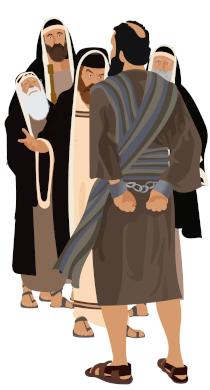
Today we continue to hear from Acts of the Apostles as we do throughout every Easter season. “The Gospel of the Holy Spirit” (Acts) highlights Paul’s courageous, strategic defense before the Sanhedrin, where he highlights theological divisions in order to survive. Standing alone, Paul exhibits bold faith, wisdom, and reliance on God, resulting in divine affirmation of his mission to Rome, through which Luke (author of Acts) reminds his readers that Christ is present in suffering.
Our Psalm response is very applicable to the passage from Acts, “Keep me safe O God; you are my hope.” This the LORD does for both Peter and Paul in the Book of Acts.
But how does Paul "strategically" divide and conquer? Paul does not shy away from testifying about Jesus, even when it leads to violent opposition.
Paul acts "wise as a serpent" by reminding them of the divide of the Sadducees and Pharisees over the doctrine of the resurrection, demonstrating that faith is not passive in the face of injustice. He plays them like a fiddle.
A major difference between the Pharisees and the Sadducees concerned the spiritual world. The Sadducees did not believe in life after death, “which is why they are sad, you see.” This “groaner” I would tell my students over the decades to differentiate one of the great disagreements between two of Judaism’s greatest sects. (“Groaner” it may have been, but students would remember this “sad- you- see” line years later.)
Later, the Risen Jesus comes to Paul, affirming his witness and guaranteeing his safety to visit the Church of Rome. God’s purposes will be accomplished, regardless of human opposition or political/religious chaos. This text challenges Christians through time to stand up for their faith, recognizing that proclaiming Jesus may lead us to being treated harshly.
Paul’s experience teaches that ultimate security comes from the promise of Christ that the faithful will never be abandoned. The Holy Spirit, whose “Gospel” Acts is, will come to us. Do we believe as Peter and Paul did?
—Timothy J. Cronin