Monday of Holy Week
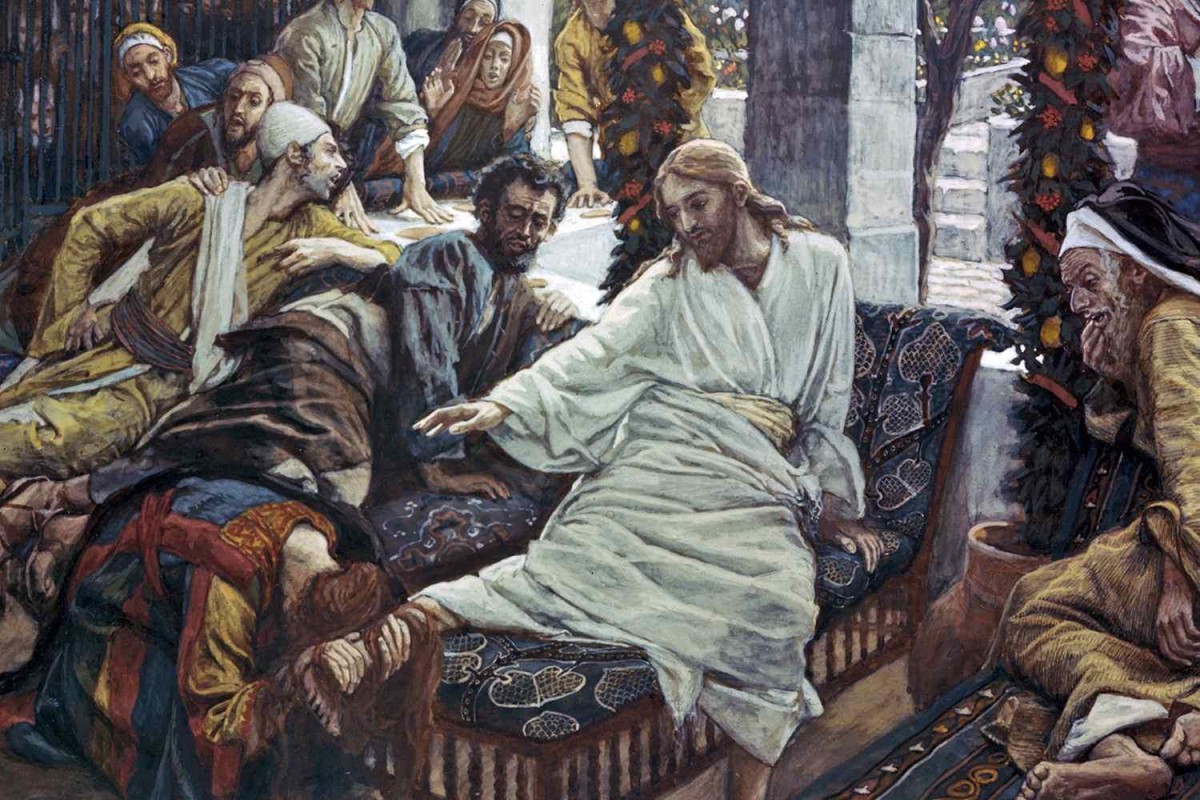
The well known tale of the sinful woman who anoints the feet of Jesus assumes that the woman is Mary Magdalene. But the Gospels never claim that. Mary Magdalene never once took an alabaster jar to anoint either Jesus’ head or his feet to the chagrin of guests watching her. Anyone who thinks that needs to go and re-read the gospel passages.
The only time she ever did anything remotely associated with anointing was when she visited Jesus’ tomb. This was with a group of other women including Salome, Joanna and Mary of Clopas. They all came to bring fresh spices but found the tomb empty and the stone rolled away.
In John’s version of the story, which we hear today, Mary of Bethany extravagantly anoints the feet of Jesus with expensive nard, used to prepare a body for burial. But I prefer the unnamed woman who does this in Mark’s earlier version. Mark supersedes John by 30 years, an entire generation by first century standards. And Mark never tells us her name. The great hero/heroine of Mark’s Gospel remains anonymous.
It is vital and responsible Bible study that we see the parts against the whole. Throughout Mark there is great emphasis on the messianic secret. This colors everything. For Mark and his community, Jesus is the fulfillment of the Suffering Servant passages of Isaiah, so important to Holy Week. The disciples and his family will have none of it. The only one who “gets it” in Mark and the ultimate heroine of that Gospel is the unnamed woman. “Wherever the Gospel is preached, what she has done today will be acclaimed in her memory" (Mark 14:3-9).
A stunning accolade from Jesus! Why is this action, unlike any other in the Gospels, singled out for such an extraordinary comment? In Mark, the disciples never understood or accepted Jesus’ impending crucifixion. For the first time, somebody (a sinful nameless woman who breaks all norms no less) believes that this messiah has come to die and if his body is not anointed for burial now then it will never be.
Truly the vast majority of us will ultimately be numbered among the so-called “unknown disciples” of Jesus. This is good news, indeed, especially for we who are destined “unknowns.” In a sense, she is the first of us. The author of Mark chose an unnamed woman as the supreme model of Christian faith. And we who profess him are her descendants in faith.
Easter, for her, came early this year.
—Timothy J. Cronin