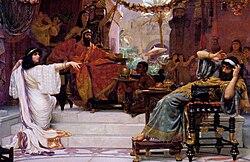
Thursday of the First Week in Lent
The Book of Esther is vital to salvation history by demonstrating God’s silent providence in preserving the Jewish people—and thus the Messianic line—from annihilation while in exile. Though God is not explicitly named (the only book of the Bible where God is not named), Esther acts as a type of Christ or intercessor, risking her life to save her people, foreshadowing the ultimate salvation.
Key aspects of Esther's vital importance include:
Preservation of the Messianic Line: By preventing the destruction of the Jews in Persia, the book ensures the continuation of the Davidic lineage through which the Messiah would come.
Divine Providence: Esther shows that God works silently behind the scenes, using ordinary people and seemingly coincidental events to accomplish the divine will.
Divine Reversal: The book highlights a profound "reversal of fortune" where evil plots (Haman's) are turned against the perpetrators themselves, showcasing God's triumph over lies.
Purim: The narrative provides the historical basis for the Feast of Purim, celebrating God's miraculous deliverance of Judah.
Probably not strictly historical, Esther serves as a "historical parable" focusing on salvation, showing that God is faithful even when the Chosen People are not.
Princess Esther grew from privilege into a queen of wisdom and courage. Her great prayer saved Judah from the wrath of Persia, surrendering Judah’s fate to the LORD, who answered her cry. “Maybe it was for this that you became queen,” her counselor and right hand man Modecai encouraged the monarch, suggesting it was in the divine plan that she lived at this particular time and place.
Muse over this in your own life. Could it be part of a divine plan that you are living at this particular time and place? Where has God acted “behind the scenes” in your own story? Is it just coincidence or is it the LORD’s hand?
—Timothy J. Cronin