Thursday of the Twenty-third Week in Ordinary Time
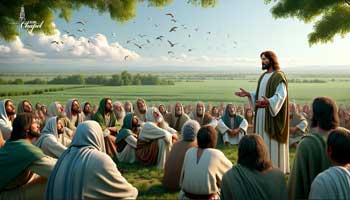
Today Luke presents Jesus’ “Sermon on the Plain," as opposed to Matthew’s “Sermon on the Mount.” The whole of this section of Luke reveals the truth of what is required for discipleship. And it is costly. This runs against the antithesis of grace, a grace we confer on ourselves, what the great German pastor and martyr of World War II Frederick Bonhoeffer derided as “cheap grace.”
What is cheap grace? It is forgiveness without repentance, communion without confession, Christianity without the cross. Cheap grace is an illusion.
Costly grace, as we learn today, is loving those who hate us, blessing those who curse us, turning the other cheek, offering our tunic to the one who takes our cloak, doing to others as we would have them do to us. Costly grace is being as merciful as God is merciful.
Yes, Jesus wants the “all” of us. Costly grace is, at its heart, self-sacrificial love. Bonhoeffer summed it up best with his most famous quote: “When Christ calls a person he bids them to come forth and die.”
As Luke concludes, “Give and gifts (grace) will be given to you; a good measure, packed together, shaken down, and overflowing. For the measure with which you measure will in turn be measured out to you” (6:37-38). That’s a good reminder to have on this anniversary of 9/11.
Bonhoeffer warned us to reject the notion that salvation is marked with an insurance policy and that Jesus can be reduced to “what he can do for us.” Cheap grace misses the mark far and wide. It is not living the Lordship of Christ as Lord of our lives.
Cheap or costly? Which shall we choose?
—Timothy J. Cronin
Image from Big Canoe Chapel