Feast of the Nativity of the Blessed Virgin Mary
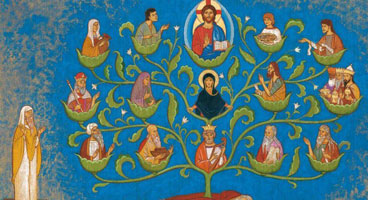
Have you researched your family tree? DNA opens vistas we couldn't have imagined just 10 years ago. I have researched my family tree back to the 13th century in some instances. The line that assisted me to do that included those who were assigned by English monarchs to govern the “within the pale” parts of Ireland in and around Dublin. Most surprising of all is my finding two canonized saints as very distant cousins: Mary McKillop of Australia and Oliver Plunkett, archbishop of Armagh and primate of all Ireland.
Outside of these two saints, my one particular family line stood out and were easy to trace because of their prestigious favors from the crown. One ancestor was placed by Henry VIII to dismantle and suppress the Irish monasteries (while remaining secret Catholics, go figure). But the bulk of surnames are from Gaelic Irish peasantry and unknowns but for a name — grandfathers and grandmothers from many generations who lead seemingly uneventful, very hard and short lives. It was from them and not the “superstars” that I received my most precious gift: my faith.
Today’s Feast of the Nativity of the Blessed Virgin Mary offers the Genealogy of Jesus from Matthew (1:1-16, 18-23). On the surface it appears to be simply “an avalanche of names” but it is much more than that. In a way, it is the entire story of salvation in miniature.
Most of the genealogy lists Jesus’ forefathers, but Matthew list five of Jesus’ foremothers: Tamar the mother of Perez; Rahab, the mother of Boaz; Ruth, the mother of Obed; Bathsheba, the mother of Solomon; and Mary, the Mother of Jesus.
All these women became the mothers of Jesus’ ancestors in unconventional/questionable ways.
Tamar became mother of Perez by disguising herself as a prostitute so that her father-in-law, Judah, would have sexual relations with her (Gn 38). Rahab was a prostitute (Jos 2:1). Ruth seemed to seduce Boaz (Ru 3). Bathsheba, who was married to Uriah the Hittite, committed adultery with David. He had Uriah killed and married Bathsheba; Solomon was their son conceived later.
Matthew includes these questionable women and the unconventional ways they conceived their children to lay the groundwork for his account of the exceptional conception of Jesus by the power of the Holy Spirit. His genealogy is recorded by listing three sections of fourteen generations each (recall the importance of the number seven as associated with God in Jewish numerology). The first fourteen begins with Abraham and ends with Jesse the father of David. The second fourteen generations lists from David until the Babylonian exile. The third of fourteen begins with the Babylonian exile and ends with the nativity of Jesus.
What I like about this so-called “avalanche of names” is what it reveals about the incredible ways God’s salvific grace works among humankind. Abraham to David lists very familiar names in the story of salvation. David to the Babylonian Exile continues with well known monarchs that, with few exceptions, in their arrogance and pride lead to the terrible consequence of the exile. The final group of fourteen names are relatively unknowns wherein the “avalanche” reaches its zenith in Christ.
What I like is that the well positioned and powerful ones in the Davidic line lead to exile in Babylon but the third listing of the obscure leads to Christ. Mary is not unlike those unknown ones through whom the movement of God saved the human race. Truth be told, one day we, too, will be simply a name on some descendants' genealogical lists. Given the impact of the “unknowns” and “insignificants” in the work of salvation, that’s not a bad place to be.
—Timothy J. Cronin