Monday of the Twenty-second Week in Ordinary Time
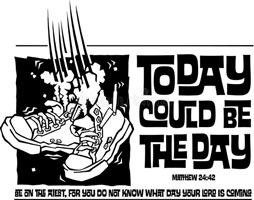
Back in the early ‘80s, as I began my 33 years at Saint Xavier High, I recall certain parents dropping off their sons on North Bend Road and then, before pulling out of the lot, glancing back to see if the boy was still there. They wanted to make sure that he wasn’t “raptured.”
This was the time when the “Left Behind” series sold over 80 million books, making the “rapture” popular, based on what we hear today in I Thessalonians 4:14-17. Millions became obsessed with these books.
But in Paul’s original Greek nowhere is the word “rapture” to be found. In fact the term is used for ecstatic trances, like those of mystics such as St. Teresa of Avila or St. Paul himself. “Rapture” owes its origins to the Latin Vulgate translation made by St. Jerome around 400 CE, meaning “to seize” or “to snatch.” The original Greek employed by Paul describes the arrival of an eastern potentate, and typical language used to describe a wondrous event.
Many fundamentalists believe the rapture will take place as the Church is literally “taken up,” Satan is loosed upon the earth, and “prophecies against Israel are fulfilled.” In truth, this obsession with the “rapture” only started about 100 years ago. Before this Christians never mentioned it.
This is why it is essential to have solid resources when we study the Bible. Our church emphasizes this in numerous documents and encyclicals. The method we are to follow is called “Historical-Critical.” This means that we must ask who, what, where, when, and how questions. Who wrote it? What kind of literary form is this? Where was it written from and where was it written to? Why was it written (the circumstances)? How was it promulgated throughout the Greco-Roman world? This is meeting the scriptures on their terms. This is true bible study in the Catholic sense.
The best places to start for our purposes are the papal encyclical Divino Afflante Spiritu by Pius XII (1943) and the document Dei Verbum (1965) from the Second Vatican Council.
The Catholic Church holds that the Bible is the Word of God in the words of fallible human beings. It is not a science book or a history book in our 21st century sense. Applying the Catholic method to the widespread misinterpretation of I Thessalonians 4:14-17 today leads to the conclusion that Paul never intended it to be understood as millions of Christians do. He wouldn’t recognize it.
So our parents didn’t need to worry that their sons might have been “raptured” from the steps of St. X (although there were a few students along the way that I would have liked to have seen “taken up.” But that‘s another story).
—Timothy J. Cronin