Monday of the Thirteenth Week in Ordinary Time
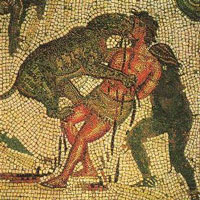
On this feast of the first martyrs of the Church of Rome, I offer the following quote from Tacitus, Roman politician and writer of the first and second century:
“Nero fastened the guilty and inflicted the most exquisite tortures on a class hated for their abominations, called Christians by the populace… Accordingly, an arrest was first made of all who pleaded guilty; then, upon their information, an immense multitude was convicted, not so much of the crime of firing the city, as of hatred for mankind. Mockery of every sort was added to their deaths. Covered with the skins of beasts, they were torn by dogs and perished, or were nailed to crosses, or were doomed to the flames and burnt, to serve as a nightly illumination, when daylight had expired.”
Tacitus continued: “Nero offered his gardens for the spectacle, and was exhibiting a show in the circus, while he mingled with the people in the dress of a charioteer. Hence, even for criminals who deserved extreme and exemplary punishment, there arose compassion; for it was not, as it seemed, for the public good, but to glut one man’s cruelty, that they were being destroyed.”
Some of the martyrs are known to us by name such as the early popes we call upon to intercede for us in Eucharistic Prayer I: Linus, Clement, Cletus, Alexander, Pius, and Fabian. Others are well known martyrs Ignatius, Cecilia, Agnes, Agatha, Lucy and Lawrence. But the majority are known but to God.
While our Christian lives may not lead to physical martyrdom, as was the case of the early Christians of Rome, we are to sacrifice our lives nonetheless. This was the ultimate lesson for those who suffered in Nero’s circus in the mist of times past.
Such total surrender was promulgated further by Vatican Council II in the universal call to holiness. In embracing the universal call of all the baptized, we may stand with those who paid the ultimate price not just in the first three centuries in Rome but in every time and place ever since, giving our lives over for the building of the Kingdom.
—Timothy J. Cronin