Memorial of the Blessed Virgin Mary, Mother of the Church
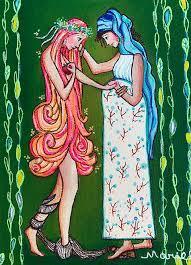
One of the boys in my classroom at St. X spoke of a time when he addressed his mother as “woman.” She was not amused. On two occasions in the Gospel of John, Jesus refers to his mother as “woman.” Was he being disrespectful?
Remember that the Gospels are narrative theology and that “Gospel” is its own particular and unique type of writing. Stories are meant to reveal, celebrate, and spread eternal truths and are not literal biography in our 21st century sense.
The first time Mary is addressed as “woman” in the Fourth Gospel (John) is at the Wedding Feast at Cana in response to the question of her son to her comment “they have no more wine.” Jesus responds, “Woman, what is that to me?” The second time is what we hear today, “Woman behold your son.”
These two incidents are the only times that Mary appears in John (although her name is never mentioned nor the name of the Beloved Disciple). Something very significant is going on here. This is the very heart of the Fourth Gospel for which everything else has been building — the hour of Jesus’ glory.
It is most appropriate to today’s feast that our first reading from Genesis concerns Eve, “the mother of all living,” as Mary is the new Eve of the new creation, book-ended by the wedding at Cana and by the outcrop of rock outside Jerusalem called Golgotha.
Jesus left us two things: the Spirit and the Church — both gifts given in today’s Gospel. When Jesus gives up his spirit and a spear is thrust into his side, blood and water flow out. Recall the water turned to wine at the start of the Gospel. Enough wine is created from that water to supply endless banquets. Both are Eucharistic actions where Mary is front and center. Here the Spirit is given to the Church (represented by the Beloved Disciple and the Mother of Jesus) and the Church is born of the same Spirit. This is John’s version of Pentecost as we heard yesterday from Acts. And Mary is significant in that story, too (this time from Luke).
At Cana, Jesus told his mother that his hour has not yet come — the hour of glory when all is fulfilled in him. The stone jars, for Jewish purification rituals, are symbols of the former covenant. The Old Covenant gave us water. The New Covenant gives us wine. Each stone jar contained over 120 liters of water turned wine, a massive amount. The groom was responsible at Jewish weddings to supply the wine for the guests. Jesus gives us a far greater wine and as bridegroom of the new covenant he supplies it still.
It is from the pierced side of Jesus that all sacraments flow — the water of baptism and the wine of the Eucharist. The wine of the banquet that was the wedding at Cana marks the arrival of the Kingdom of God and the endtime eternal banquet. First century Jewish wedding banquets could last for several days. The Kingdom of God banquet is never ending.
Our task as disciples is to show forth what it means to be born of the Spirit. Both the Mother of Jesus and the Disciple Whom Jesus Loved symbolize the whole church, faithful to the end and washed in the blood of the Lamb.
They symbolized you and me.
—Timothy J. Cronin