Memorial of St. Boniface, Bishop and Martyr
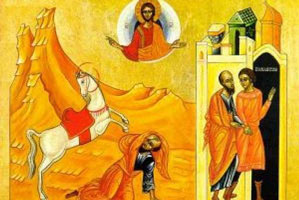
As we continue our journey through Acts, as we do every Easter season, we hear Paul announce before the Sanhedrin that he is a “Pharisee, the son of Pharisees.”
What’s up with that?
Paul didn’t “convert” on the road to Damascus. He didn’t simply stop being the extremist Saul of Tarsus and suddenly became a “Christian.” There was no such thing (yet) called Christianity to convert to in the year 36 CE.
The separation of Jesus Jews from other sects of Jews wouldn’t happen until after the destruction of Jerusalem in 70 CE and the beginning of the Jewish diaspora. The Jewish sects of the Sadducees, Zealots and Essenes were eliminated altogether. The two strains of Judaism that survived the devastations of 70 CE were Pharisaic or Rabbinical Judaism along with the “Followers of the Way,” who would eventually be called “Christians.” That was 6 years after Paul’s death in Rome.
In his own letters Paul never says that he “converted.” Rather, he presents himself like an Old Testament prophet, commissioned by God, to proclaim Israel's messiah, Jesus of Nazareth. Paul’s faith in Jesus was not separated from but firmly rooted in his identity as a Jew (from the tribe of Benjamin) and as a Pharisee.
Anyone called “a Pharisee of Pharisees” today would be an insult. Today it means a self righteous hypocrite.
Saying that Paul never “converted” does not suggest that he and others did not experience profound transformation in Jesus the messiah. Paul was transformed and “commissioned” to spread the Gospel. He proclaimed a new stage of salvation history. The God of Abraham, Isaac and Jacob had launched something new. Therefore, what happened to the Jews who accepted the Gospel was not a conversion into a new religion but a further development in salvation history that began with Abraham, Isaac, and Jacob.
And by faith, you and I are also their descendants.
—Timothy J. Cronin