Memorial of St. Philip Neri, Priest
Elizabethan England was dangerous for Catholics as the church went underground and priests (mostly Jesuits) were smuggled in, hidden by the old aristocracy. These “safe houses” were headed by widows who found much solace in the “old religion,” secretly keeping the Catholic Church alive for common folks hungry for the sacraments.
Among these widows were Elizabeth Vaux and Eleanor Brosby who hid Jesuits in “priest holes,” crafted behind fireplaces, staircases, and under floorboards in attics. These shrewd widows were labeled “Jesuitesses” and “a stain and dishonor to womanhood” by the authorities.
Lilian Peachalk was a stalwart at Sacred Heart Church on Youngstown's east side for over 30 years. Officially she was the sacristan, but for decades she kept the pulse of the parish, knowing who was sick or in need of help. Parish staff relied on her to keep them informed of what was happening in the trenches. Widowed at a young age, she was a deacon all but in name.
Today, Sabina Moran, also a widow, keeps the wheels oiled and running smoothly in her parish in Grand Haven, Michigan. She does it all from training the servers, serving as a catechist, and scheduling perpetual adoration. When parishioners are in a bind they call her. Clergy come and go but stalwart Sabina is always there.
Modeling Christ the Servant, they wear no official stole. These ladies, including many widows, are true daughters of Lydia, encountered in today's reading from Acts. Widow Lydia was the first European convert to Christianity, baptized by St. Paul himself.
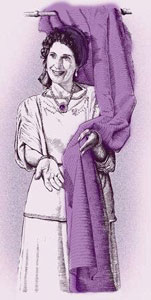
Upon their first arrival to European shores at Philippi, missionaries Paul, Silas, Timothy, & Luke encountered “God fearing” women gathered for prayer. “Godfearers” were Gentiles attracted to Judaism. They met Lydia, a dyer and seller of purple---a “purpuraria.”
Lydia was a successful businesswoman, extraordinary for the times. Purple cloth was expensive. Only the elite could afford the purple, so she had influential clientele. We hear today that Lydia offers her home to Paul and his companions, the first European “house church.” The house church was the standard way Christians assembled in the early centuries.
This wasn't without risk. Citizens in Philippi objected strenuously to Lydia's hospitality and leadership in allowing her home to be Paul's base (not mentioning the first ever church in Europe.) They would have seen her as acting beyond her station amid the masculine dominance of the first century. “Know your place, woman!” Can you hear them?
But Lydia refused to “know her place.” By the grace of God, purpuraria pressed on. The first baptized European led the way for countless women yet to come.
Recent popes have called sexism “sin.” Pope Francis had stated that “we must see in the modern women's movement the working of the Spirit.” But let there be no question. The rejection of chauvinism in all forms originated not with Paul or Silas or Timothy or Luke, but with Jesus of Nazareth.
—Timothy J. Cronin