Monday of Holy Week
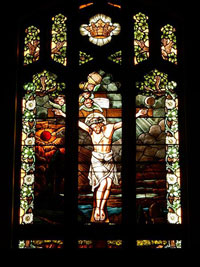
He will not cry out, nor make his voice heard in the street.
—First Oracle of the Servant of the LORD.
The Book of the prophet Isaiah is divided up into three parts with three different authors in three different time periods:
- 1st Isaiah (Isaiah of Jerusalem before the exile) chapters 1-39
- 2nd Isaiah (anonymous prophet of the exile) chapters 40-55
- 3rd Isaiah (anonymous prophet after the exile) chapters 56-66
Today we hear from 2nd “Isaiah,” which contains the Suffering Servant oracles. We aren’t sure who this servant is. Possibilities include Second Isaiah himself/herself (there’s a long tradition that this writer was a woman), the entire people of Judah, or a future messiah. Our setting today is the return of Jewish captives from Babylon in 538 BCE.
The early Jesus communities identified Jesus as this servant, giving us a means to touch the bruised face of the LORD. A great gift of Lent is the invitation for we who have grown weak or dim to touch the holy face. “Who could fail to recognize the suffering Christ within the contours of the Servant’s face?” (USCCB) He comes not to condemn the weak of heart but to invite them into the Kingdom of God’s justice. Like the Servant, we, too, will be vindicated.
This rich imagery in the four Suffering Servant oracles (today’s is the first) invites many questions. Here are some:
- Why do you think that suffering is so often a reality for God’s chosen ones?
- What parts of you are “bruised” or “dimly burning?”
- Do you find yourself even more open to God’s merciful grace when under suffering or duress?
- Like the Suffering Servant, how might we heal and strengthen the weak and oppressed we encounter?
- What stirs within you when you observe innocent suffering?
- In your own pain do you feel like you suffer alone or does Christ suffer with you?
—Timothy J. Cronin