Memorial of Our Lady of the Rosary
“I am amazed that you have so quickly forsaken the one who called you by the grace of Christ for a different Gospel.” —Galatians 1:6
So Paul writes to his foundling community in Galatia. Truths divergent from the ones Paul preached reared their ugly heads among neophyte believers there. This confused and unsettled those new converts. Paul’s concern in the early 50s can be applicable to many false gospels making the scene over two millennia since. One such is today’s abhorrent “prosperity gospel.” Another, and a far more common one, is a more divergent gospel than the prosperity travesty, as we will see.
Cathleen Falsany wrote in the Chicago Sun Times, “The Gospel of ‘prosperity’ turns Christianity into a vapid, bless-me club with a doctrine that amounts to little more than spiritual magical thinking: if you pray the right way God will make you rich.” So much for the Beatitudes and other teachings of Jesus. Now the poor are poor because they just don’t believe enough.
Yet there is an even more common “divergent Gospel” these days — one more subtle and, it can be argued, more deadly than even the twisted ‘prosperity” version. For this more common “Gospel” is without power, without potency. And that is its tragedy.
For you see, this is the Gospel proclaimed and heard in our churches every Sunday but left resting on the ambo when we leave the building. Like the bread of the Eucharist, the bread of the Word of God must also be consumed by the gathered assembly. Thus transformed, the congregation becomes what we eat and drink — the bread, the wine, and the proclaimed Word.
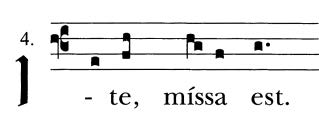
Every Mass concludes with the same dismissal rite — a sending forth (“Ite, Missa est”). It is more than “class dismissed.” We are entrusted to be and to bring what we have consumed, both Word & Eucharist, into our week and into our world. To leave the building without the sacrament of the Word and the sacrament of the altar is akin to saying “no” to this mandate and akin to leaving behind the Christ who, through the person of his minister, has sent us out to serve in his name.
For we do not consume Word & Eucharist for ourselves alone. This is our great commission at the dismissal, our “sending forth,” of every Mass. For this living and efficacious Word of God does not have potency or power by laying dormant on the ambo in the sanctuary. We must not leave the Word behind but take it in our person and with purpose out into the world God so loves.
“You may be the only scripture that some people will ever hear. You may be the only Jesus some people will ever know.” —Attributed to St. Francis of Assisi.
—Timothy J. Cronin