Monday of the Seventh Week of Easter
In tradition, the month of May has been dedicated to Mary. Why?
In ancient Greece, May was the month of Artemis, goddess of fertility. In Rome, May was dedicated to Flora, the goddess of blossoms. Marking the beginning of springtime, there has been a desire to honor motherhood and new life in May that stretches all the way back in antiquity.
The Church has “baptized” certain elements of pagan culture, taking pagan rituals and holidays by refocusing them towards Christ (like the Easter fire borrowed from the Celts). It seems natural, then, that the desire to honor motherhood in May would lead to honoring the Mother of Christ during that month.
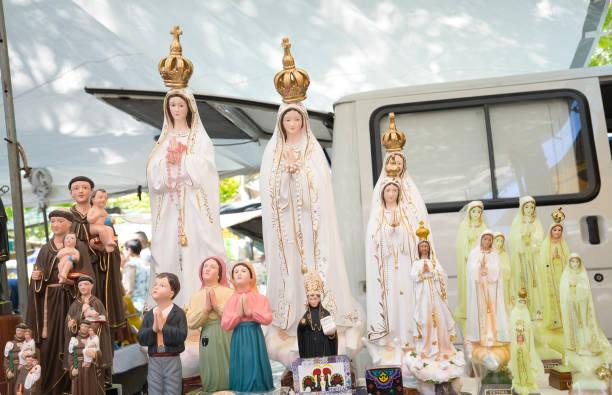
Today we celebrate a Marian feast: Our Lady of Fatima. Why did Mary appear to the children there in 1917? She could have shown herself to renowned theologians and learned professors, to mother superiors and abbots and abbesses, to monsignors and cardinal archbishops and even to Benedict XV in Rome. But she didn’t. Instead, she chose three peasant children from insignificant Fatima in Portugal. They were only 9, 8, and 6 years old.
Perhaps Our Lady appears to children because a childlike heart is open, uncomplicated, trustworthy, and genuine. Jesus esteemed children and upheld them as the standard for Kingdom citizenship. The least and the lowly are always first in the Kingdom. The Psalmist in today’s liturgy sings that we are to “rejoice and exult before God (who is the) Father of orphans and defender of widows…who gives a home to the least…”
Freud wrote that “the child is father to the man (or woman).” Our childhood impacts who we are as adults to a tremendous degree, both good and bad. Childhood lays the foundation of our adult identity, our child still living within.
We learn a lot from watching children. Whatever the circumstances, they find ways to enjoy whatever they’re doing. Quick to forgive, one moment they’re fighting over something, the next moment they’re playing together again. And trusting comes easier to them. Children don’t worry about mortgage payments or making ends meet.
How can we be more childlike? To have simple faith; to pray simple prayers; to be quick to forgive; to reach out to God as a child would; to believe that our heavenly Father is good. With this kind of simplicity we’ll find ourselves growing spiritually and drawn to God more and more. Not a bad thing, that.
—Timothy J. Cronin