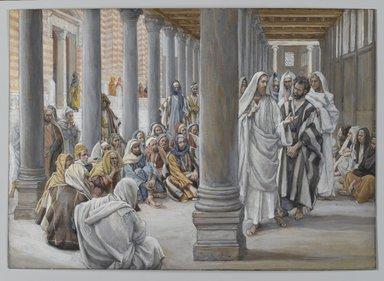
Monday of Holy Week
“Maundy”?
“Maundy" comes from the Latin word mandatum, or mandate/commandment, drawing on Jesus' words in John following the washing of the feet at the Last Supper, "I give you a new commandment. Love one another."
Maundy Monday can be traced back to the 300s. Lent was/is the 40 days of intensive preparations by prayer, fasting, and almsgiving especially for catechumens who are preparing for the Easter sacraments. During the third century, only Good Friday and Holy Saturday were observed and considered holy days. Later on, “Spy Wednesday” was added to the observance as the day when Judas betrayed Jesus. In the fourth century, the term “Holy Week” was first used by St. Athanasius, bishop of Alexandria. It now includes the rest of the weekdays: Palm Sunday, Maundy Monday and Maundy Tuesday.
It was on Maundy Monday when Jesus walked to Jerusalem from Bethany. On this day, he made his move against the temple.
Holy Week celebrations have changed through the centuries. In 1955 observances in the Roman Missal were revised, restoring Holy Week liturgies by the time and day as recorded in the Gospels. As a result, the liturgies celebrated today by Catholics, Anglicans, Methodists, Lutherans, and Presbyterians during Holy Week are very similar. This is a fine thing.
Mandate or commandment, Jesus enters his passion with words he expects us to adhere to in order to be his disciples: “Love one another, as I have loved you. Abide in my love.” This is the new law, the law of Christ.
As best as we can, given the demands of life, let us purposefully enter this week that defines us like no other. Let us talk less and even think less. Let us simply be present to the days, our response to the greatest of all mysteries, the Paschal Mystery, in stillness wherever and whenever we can find it.
—Timothy J. Cronin