Memorial of Saint Agatha, Virgin and Martyr
Today we give thanks for Agatha, a 3rd century Sicilian martyr. Because of her great courage, the Church included her in the first Roman Canon along with fellow virgin martyrs Anastasia, Agnes, Cecilia, & Lucy. Today we call it Eucharistic Prayer I.
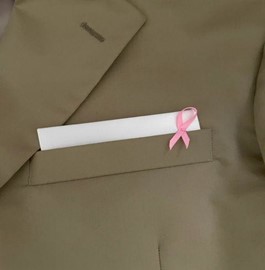
As she is patron saint for breast cancer victims, I thought it appropriate for a woman to speak on Agatha’s feast. What follows is from Aya McMillan’s blog “Rethink Breast Cancer”:
I learned of Agatha shortly after being diagnosed with breast cancer from a dear friend’s father, an older gentleman from southern Italy. St. Agatha is the Patron Saint of Breast Cancer and her story goes
something like this: Third century Agatha, from early on, gave herself wholly to Christ. Quintianus, Governor of Sicily, was enamored and thought he could get her to betray her heavenly spouse. In an attempt to force marriage, he had Agatha arrested and imprisoned. She wouldn’t break.
Enraged by her refusal, the Governor ordered Agatha to be hooked to an iron rack, whipped, and burned with torches. Agatha endured it all. So, as a final depraved act, Quintianus commanded that her breasts be cut off. It’s why you see Agatha depicted in iconography with her breasts on a plate. She remains a powerful intercessor for women in danger.
Agatha’s backstory is horrific, but even for its barbarism, hardly unfamiliar. It’s just another example of the powerful attempting to prevent and punish a woman for speaking her mind.
In 2017, I felt that silencing, viscerally. Cancer treatment has a way of silencing you. It’s a routine that requires you to be pliant and agreeable, no matter how much it hurts. Submitting to have a generous portion of your breast removed and the rest of it burned to a black crisp with rounds of radiation are just par for the course.
Theologian and author Nadia Bolz–Weber was quoted in Glennon Doyle Melton’s book, Love Warrior:
“When you’ve worked through it all and you’ve gotten a chance to mine your pain for gold, then you can offer it as a gift. When pain is fresh, we share it with friends, not with Facebook. But when we’re ready to present what we’ve learned, when the wounds are sufficiently scarred over and we’ve figured out how our pain and experience speaks to universal pain, when we can say, this is about me but not really. Really, this is about us, then we are ready to offer it to the world.”
I hope you come to love Agatha as much as I do. – Aya McMillan
-Timothy J. Cronin
(Our annual Ite Missa Est Lenten Discipleship Challenge booklets to assist and guide us through the coming 40 days, are available beginning Saturday in the church vestibule. Be sure to pick one up. The reflections were written by fellow parishioners within our Family of Parishes.)