Monday of the Tenth Week in Ordinary Time
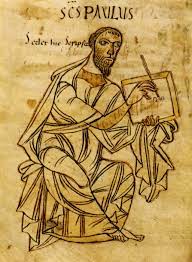
According to Acts of the Apostles, Paul founded the church at Corinth and stayed there 18 months (Acts 18:1-18). When divisions arose after his departure, he sent his beloved Timothy and followed that up with what we call I Corinthians.
Unfortunately, after Timothy left, arguments returned and Paul himself had to make a “painful visit” to confront the troublemakers (II Cor. 2:1ff). Still, no solution. He then wrote “a severe letter,” delivered by Titus. Upon hearing that they had reconciled, Paul responded with his intensely personal II Corinthians, the first seven verses which we hear today.
Before the canon of the New Testament was set in the 4th century, not all the churches held the same scriptures as inspired. Some claimed only one of the four Gospels as the differences and contradictions one Gospel to the other caused them consternation. Alexandria in Egypt read only Mark while Ephesus placed John above the rest.
Revelation was always tenuous. The Catholic Epistles were iffy, although James and I Peter seemed for sure. The Letters of Clement were included by the Church of Rome. And many of the churches founded by Paul taught that Luke/Acts and the Pauline writings were the only ones to be used in liturgical assemblies.
Serving at various Cincinnati parishes and schools for 40 years, I was amazed at the fortitude and perseverance of the various parish school principals. “I couldn’t do your job,” I would tell them. “Everyone who comes through your door comes with a problem.”
So it seemed with Paul. His letters suggest constant and continuous divisions within his foundling churches of the ‘50s and ‘60s. Paul addresses these time and again. Can you imagine if our New Testament consisted only of the Pauline letters? Some of the churches did just that!
After conducting Beethoven's magnificent Ninth Symphony, Arturo Toscanini brought down his baton to a burst of applause. Toscanini and his orchestra took repeated bows. When the cheering finally subsided, the maestro turned back to his musicians and leaning over the podium whispered, "Gentlemen, I am nothing. . . . you are nothing. . . . But Beethoven .. .
Beethoven is everything, everything, everything!"
Can we likewise hear Paul’s emiseries Timothy and Titus leaning into the assembly at Corinth upon their unhappy visits there, speaking the same but exchanging the name “Beethoven” for “Christ.”
This ultimately was the solution to all divisions within Paul’s foundling churches: “Christ is everything, everything, everything.”
And so it must be with us.
-Timothy J. Cronin