Memorial of Saint Benedict, Abbot
“Pone super eum crucem!” This Latin phrase was the most frightful spoken at the time of Jesus. It translates to “Place the cross on him!”
Everyone is aware of the cross because the cross is everywhere. It’s a bejeweled work of art in museums and a band of gold worn by Elizabeth II. It is featured on the national flags of twenty countries and worn as a petite chain around the neck. We are so familiar with the cross that its shamefulness and terror can be lost to us.
Jesus was intimately familiar with the cross but not the ruby and diamond kind. He came of age in “Galilaeae rebellionum” (“Galilee of the rebellions”), literally in the shadow of the cross. A stone wall unearthed near the forum of ancient Pompeii advertized a team for hire who could be contracted to crucify any unruly slaves you happen to own. Crucifixion was not just state sponsored terrorism (which it was) but a service offered by what today we would call “start ups.” That’s how common it was.
Still Jesus advises his disciples, “Anyone who does not take up their cross and follow in my footsteps is not worthy of me.” Today’s political consultants would probably advise the Lord that that isn’t exactly the kind of slogan that will grow your movement.
Why would anyone sign on for a movement that straight out announces that it might well cost you everything, even your life?
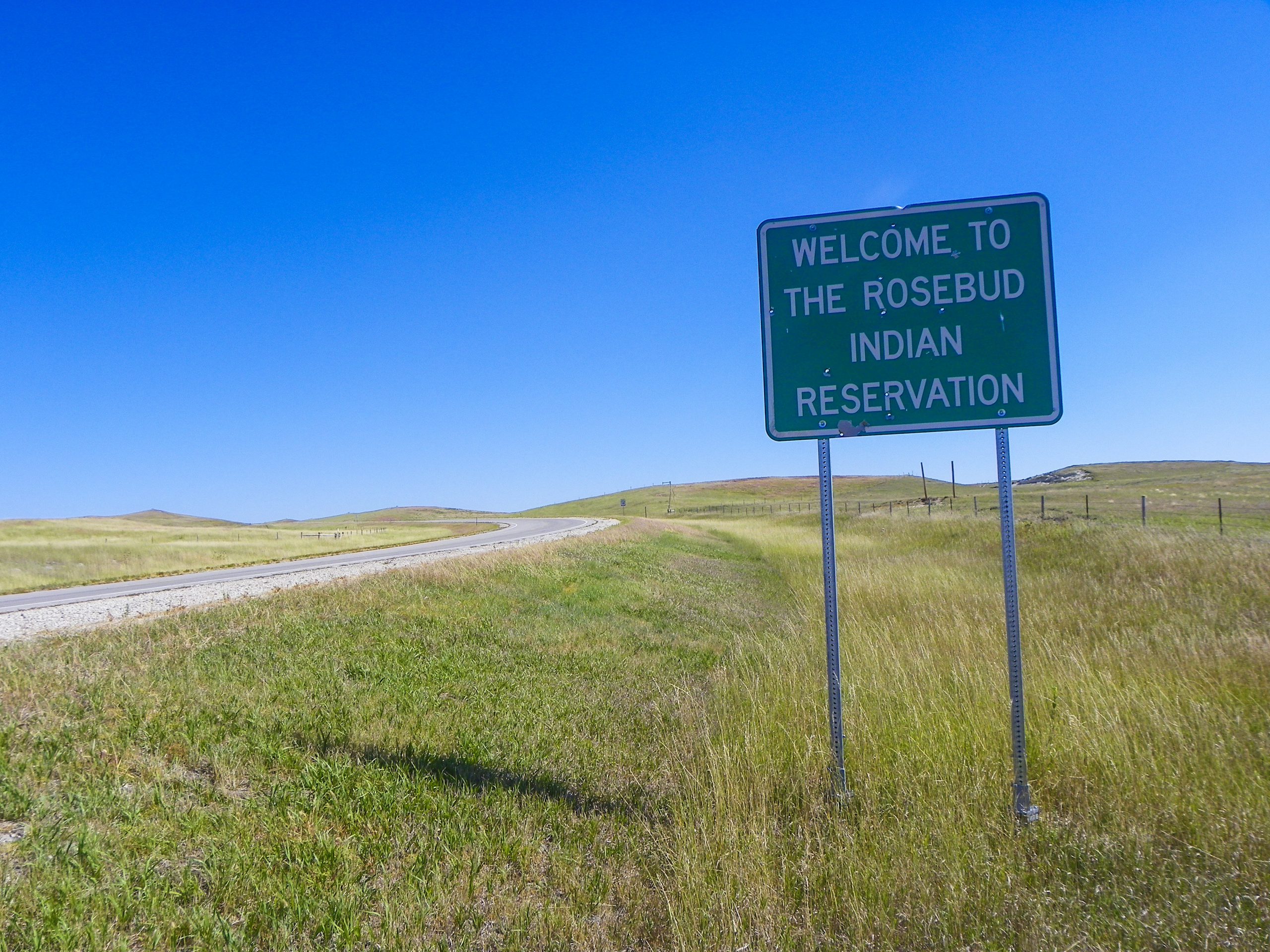
20+ years ago I led a summer mission trip of twelve St. Xavier High juniors to the Rosebud Indian Reservation in St. Francis, South Dakota. Our orientation made it clear that we were not going on a two week vacation. It would be hard and it would be demanding. The reservation was an unhappy place. Alcoholism rates were near 90%. For Lakota children our boys would be the only “Disneyland” they’d ever know. But from the Lakota teens they’d encounter disdain at worst and suspicion at best.
For the first time in their young lives our lads would be a distinct minority, 1000 miles away from home. Likable and good kids would receive less than enthusiastic receptions.
Teenage boys more comfortable competing and teasing one another had to put boyishness aside and support and watch out for one another. They’d come to love native people who didn’t always love them back. Taking up the crosses of their own inadequacies, insecurities, and naivete fulfilling the demands of today’s Gospel.
In their youthful exuberance they’d come to change the Lakota but discovered that they were the ones who changed. Humility was never a strength of our St. X kids. But it was a necessity to make sense of what they’d seen and experienced on the reservation.
Coming home all twelve insisted on helping to promote our particular trip to the upcoming year’s juniors. They were blatantly honest about what they had experienced. I worried that nobody would sign up. Instead what happened was a tripling of applications for our particular trip.
Some of this increase was due to something deep inside the adolescent male that longs for a demanding initiation, a rite of passage. But it was more than that. Christ, after all, is the reason for X High and all Catholic schools.
Our juniors had been present to a people with a great many crosses to bear. Generously they attempted to lighten the load of a hurting people, desperately wanting to make a difference.
All of us have known the cross and some have been far too familiar with its spawned word “excruciating.” The cross our kids carried at the Rosebud came out of an offering of friendship and healing far beyond their years. As such it was and is and will evermore be an Alleluia cross. After all, the cross is never the end of the story—not for Jesus, not for the young men on that mission trip, not for any one of us.
Timothy J. Cronin